AI Crypto Trader: Build & Backtest Your Strategy No-Code
Most platforms marketing themselves as "AI crypto traders" are selling you a black box — you deposit funds, a bot trades, and you hope for the best. This guide takes a different approach: it explains exactly how automated crypto trading works under the hood, what features actually matter when evaluating a bot, and how a visual, no-code strategy builder lets you define, validate, and own your trading logic before risking a single dollar.
What Is an AI Crypto Trader?
An AI crypto trading bot is software that monitors market conditions and executes buy or sell orders automatically based on a defined set of rules. That definition covers a wide range of products — from genuinely sophisticated systems to simple rule-based scripts with "AI" stamped on the marketing page.
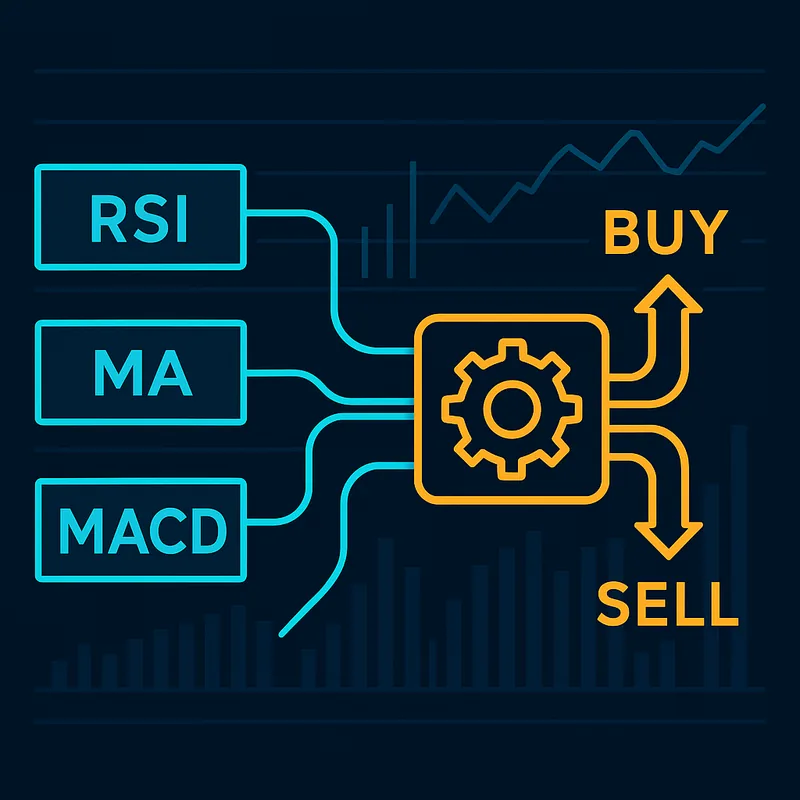
AI vs. Algorithmic: What's Actually Powering Most Crypto Bots?
True machine learning in trading involves systems that train on historical data and adjust their own parameters based on what they find — without explicit human reprogramming for each change. Rule-based bots work differently: they follow deterministic, pre-written logic: if RSI crosses below 30 and price is above the 200-day moving average, open a long position. No adaptation, no learning. Just rules.
The word "AI" is frequently a marketing label applied to pre-programmed logic. That's not inherently bad — rule-based automated trading strategies are transparent, testable, and controllable. But you should know what you're actually buying.
Copy Trading vs. Building Your Own Strategy
Copy trading lets you mirror another trader's positions automatically. It's fast to set up and requires zero strategy knowledge — but you're renting someone else's logic, with no visibility into why trades are taken, no ability to adjust risk parameters to your situation, and full exposure to that trader's drawdowns. Building your own automated trading strategy takes more upfront effort, but you understand every rule, you can backtest it, and you can modify it when market conditions change.
How AI Crypto Trading Bots Work
From Signal to Trade: The Condition-to-Execution Pipeline
Every automated strategy follows the same pipeline: a market condition is detected → a signal is generated → an order is sent to the exchange → the exchange executes it.
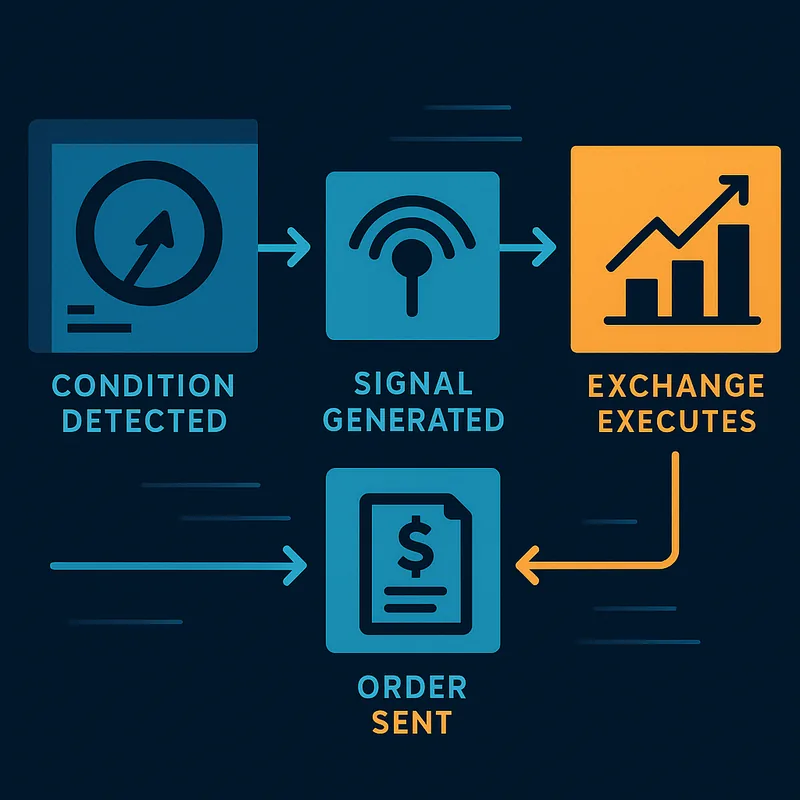
The condition layer is where the real work happens. Common trading indicators used as inputs include:
- RSI (Relative Strength Index) — measures momentum; often used to identify overbought or oversold conditions
- MACD (Moving Average Convergence Divergence) — tracks trend direction and momentum shifts via two moving averages
- Moving averages — smooth price data to identify trend direction; crossovers between a short and long MA are classic entry signals
- Volume — confirms whether a price move has conviction behind it
Entry and exit conditions combine these signals with logical operators (AND, OR, NOT) to define precisely when a bot opens or closes a position. A well-built strategy specifies both sides: when to get in and when to get out.
Where DCA, Stop-Loss, and Trailing Exits Fit In
DCA (dollar-cost averaging) in bot trading means placing additional buy orders at lower prices if the position moves against you — reducing your average entry cost. It's a common risk-spreading technique, but it requires careful position sizing so averaging orders don't compound losses beyond your tolerance.
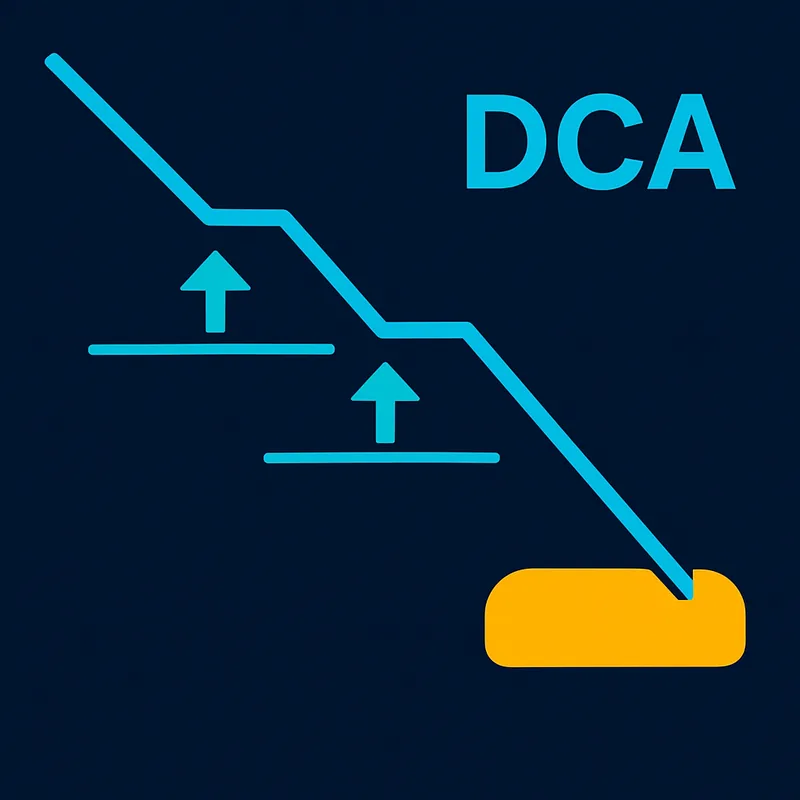
A stop-loss is a hard exit rule: if price falls to a defined level, the bot closes the position to cap the loss. A trailing stop is a dynamic exit that adjusts as price moves in your favor, helping lock in gains while still giving the trade room to run. Both are essential risk management controls, not optional extras.
Exchange integration is the final layer: the bot connects to your exchange via API, translating strategy signals into real market or limit orders. Execution speed, API reliability, and fee structure all affect real-world results.
Key Features to Look for in an AI Crypto Trading Bot
Transparency and Explainability: Can You See What the Bot Is Doing?
The single most underrated feature in any trading bot is the ability to see why it made a trade. A visual debugger that highlights chart zones tied to each condition — showing exactly where a rule triggered — is far more valuable than a trade log full of timestamps. Without it, debugging a losing strategy is guesswork.
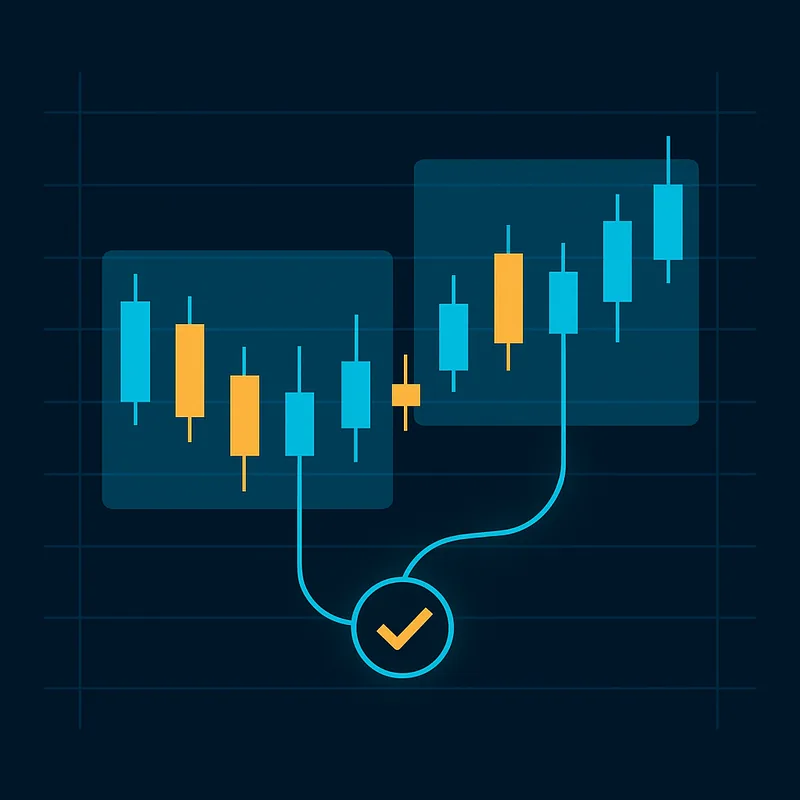
Look for: rule-level visualization on the chart, not just a list of executed orders.
Backtesting: Validate Before You Risk Capital
Backtesting runs your strategy against historical price data to show how it would have performed. It's the only honest way to evaluate a strategy before going live. A platform that doesn't offer backtesting is asking you to gamble on untested logic.
Look for: backtesting that shows individual trigger points on the chart, not just an equity curve. You need to see where each rule fired to understand whether the strategy is behaving as intended.
No-Code Customization vs. Pre-Built Templates
Pre-built templates get you started quickly but lock you into someone else's logic. A no-code strategy builder with a condition builder that supports nested logic — combining price, indicator, volume, and crossover conditions with AND/OR operators — gives you the flexibility to encode your own edge without writing code.
Other features worth evaluating:
- Risk management controls: configurable stop-loss, trailing stop, and position sizing
- Exchange integration breadth: does it support the exchanges you actually use?
- Free-to-start access: can you build and backtest before committing to a paid plan?
Best AI Crypto Trading Approaches in 2025: Black-Box vs. Build-Your-Own
Black-Box AI Bots: Fast Setup, Limited Control
Platforms like Cryptohopper, 3Commas, Pionex, and Stoic AI are commonly cited in the automated trading space and generally market themselves around pre-configured strategies and fast onboarding. For traders who want to deploy capital quickly without learning strategy construction, that convenience is appealing. The trade-off is opacity: you often can't inspect the exact conditions driving decisions, can't backtest your specific configuration against historical data in a meaningful way, and can't easily explain why the bot took a losing trade. Copy trading features on these platforms carry the same limitation — you're exposed to logic you don't control.
These tools suit traders who prioritize speed of setup over depth of understanding.
Visual Strategy Builders: Own Your Logic, See Every Trigger
A no-code visual strategy builder is a different category entirely. Instead of selecting from preset strategies, you construct your own logic using a drag-and-drop interface — defining entry conditions, averaging orders, exits, and stop-losses as connected building blocks. Quberas uses a deal map interface for this: a visual canvas where each component of your strategy is a node you can inspect, modify, and connect.
The condition builder supports complex nested logic — for example, "enter long if RSI(14) < 35 AND 50-period MA is rising AND volume is above its 20-period average." Every condition is visible, every trigger is shown on the chart. This approach suits traders who want to systematize a strategy they already understand, not delegate decisions to an algorithm they can't interrogate.
Can ChatGPT Do Crypto Trading? LLMs vs. Structured Strategy Builders
This question comes up constantly, and the short answer is: not reliably, and not safely.
ChatGPT and other LLMs can generate trading strategy ideas, explain indicators, or even write Python code for a simple bot. What they cannot do is backtest that code against real historical data, connect to an exchange and execute orders, manage live positions, or guarantee that the logic they produce is free of errors. An LLM has no execution layer, no risk management enforcement, and no way to validate whether the strategy it describes would have been profitable.
Machine learning models trained specifically on market data are a different matter — but they require significant infrastructure, data pipelines, and expertise to build and maintain. They are not what you get from a chat interface.
A structured, rule-based visual strategy built in a dedicated platform is fundamentally more reliable for retail traders: the logic is deterministic, every condition is inspectable, and you can run a backtest before touching live capital. The gap between "ChatGPT wrote me a strategy" and "I backtested this strategy on 12 months of historical data and saw every trigger on the chart" is the gap between speculation and informed decision-making.
Is AI Crypto Trading Profitable?
Why Backtesting Is the Only Honest Answer
There is no universal answer to whether AI crypto trading is profitable — it depends entirely on the strategy, the market conditions, and how well risk is managed. Anyone claiming guaranteed returns is either uninformed or misleading you.
What backtesting gives you is an honest starting point. By running your strategy against historical data, you can see: how many trades it would have taken, what the win rate was, what the maximum drawdown looked like, and whether the entry and exit conditions actually behaved as you intended.
What Backtesting Results Actually Tell You (and What They Don't)
Backtesting results are necessary but not sufficient. They tell you how a strategy would have performed under past conditions — they do not guarantee future results. Key limitations to keep in mind:
- Slippage and fees: live trading incurs costs that backtests often underestimate; always factor in exchange fees and realistic fill prices
- Over-optimization (curve-fitting): a strategy tuned too precisely to historical data may perform well in backtests but fail in live markets because it's been fitted to noise, not signal
- Market regime changes: a strategy calibrated to one type of market environment — trending, ranging, or high-volatility — may behave very differently when conditions shift
Visual backtesting — where you can see exactly which chart zones triggered each rule — helps catch curve-fitting early. If your entry conditions are firing on obvious hindsight patterns that wouldn't have been identifiable in real time, you'll see it on the chart. DCA strategy backtests in particular need scrutiny: averaging down can look excellent in historical uptrends and damaging in sustained downtrends.
Stop-loss and position sizing settings have an outsized effect on backtested outcomes. Test multiple configurations, not just the one that produces the best-looking equity curve.
Risks and Limitations of AI Crypto Trading
Automated trading doesn't eliminate risk — it systematizes it. Understanding the specific risks involved is part of responsible deployment.
Market risk and crypto volatility: crypto markets are known for sharp, rapid price swings. A bot running without a stop-loss during a sudden downturn can accumulate losses faster than a human trader would allow. Volatility is the environment your strategy operates in, not a problem that automation solves.
Over-optimization: as noted above, backtesting creates a temptation to keep adjusting parameters until the historical results look perfect. The result is a strategy that fits the past but has no predictive edge going forward.
Exchange API risks: bots depend on stable API connections. Exchange downtime, rate limiting, or API key issues can cause missed trades, duplicate orders, or failed stop-losses. Always test connectivity before going live with significant capital.
Black-box risk: if you don't understand why your bot made a trade, you can't improve it, you can't trust it during drawdowns, and you can't know whether a losing streak reflects a broken strategy or normal variance. This is the core argument for transparency — not knowing your own strategy logic is a risk in itself.
The best mitigations available to retail traders are straightforward: use a stop-loss and trailing stop on every strategy, size positions conservatively, and only deploy strategies whose logic you can explain in plain language.
How to Get Started with an AI Crypto Trader on Quberas
Step 1: Define Your Entry and Exit Conditions Visually
Start by opening the drag-and-drop deal map interface. This is a visual canvas where you construct your strategy as connected nodes — entry conditions, averaging orders, take-profit exits, and stop-losses are each defined as separate blocks and linked together. No coding required.
Use the puzzle-style condition builder to define each rule: select your indicator (RSI, MACD, moving average, volume, or price action), set the threshold or crossover condition, and combine multiple conditions with AND/OR logic. Nested conditions — for example, requiring both a momentum signal and a volume confirmation before entry — are built by connecting condition blocks, not writing code.
Step 2: Backtest on Historical Data and See Every Trigger on the Chart
Before going live, run a backtest. Quberas's visual debugger highlights the chart zones where each condition triggered, so you can see not just the equity curve but the exact moments your rules fired. This makes it immediately obvious if your entry logic is behaving as intended or catching patterns that only look good in hindsight.
Review the results critically: check win rate, maximum drawdown, and how the strategy behaved during volatile periods. Adjust stop-loss levels and position sizing, then retest. Iterate until the logic is sound — not until the backtest looks perfect.
Step 3: Connect Your Exchange and Launch
Once the strategy is validated, connect your exchange account via API. Quberas supports direct exchange integration, translating your visual strategy into live order execution. Start with a small position size to confirm live behavior matches backtested expectations, then scale up as confidence builds.
No coding is required at any stage. The entire workflow — build, visualize, backtest, launch — is designed for traders who want full transparency into their strategy without needing a software engineering background.
Ready to build an AI crypto trading strategy you actually understand? Start with Quberas for free — define your conditions visually, backtest on real historical data, and see every rule trigger directly on the chart before you risk a single dollar.