Futures Prop Trading Firms: Choose & Validate
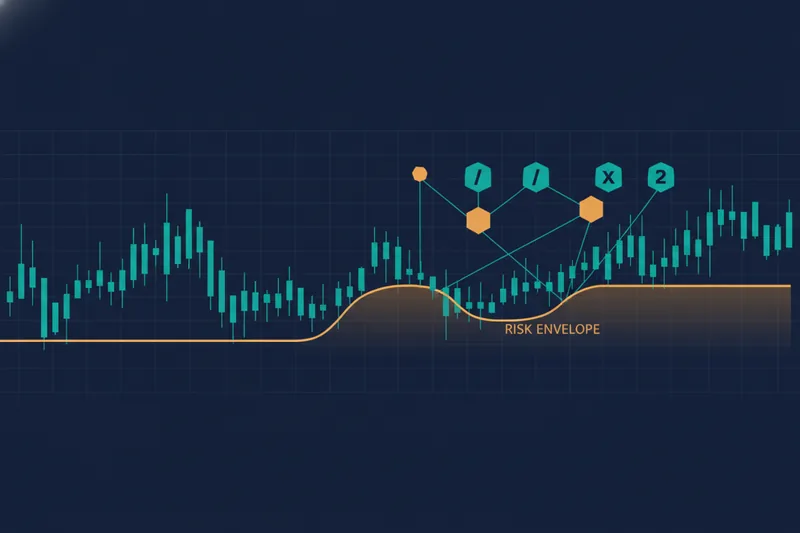
Choosing a futures prop trading firm comes down to three things: whether your strategy can survive the firm's specific drawdown and consistency rules, whether the fee structure and profit split make sense for your account size, and whether you've actually tested your logic against those rules before paying for an evaluation. Most comparison guides rank firms by referral commissions and marketing copy. This one focuses on the mechanics — how evaluations work, what actually fails traders, and how to validate a strategy against a firm's rulebook before you risk an evaluation fee.
What Is a Futures Prop Trading Firm?
A futures prop trading firm gives traders access to a simulated or firm-owned capital account to trade futures contracts — standardized agreements to buy or sell an asset (stock indices, commodities, currencies) at a future date — without the trader funding that account themselves. In exchange, the trader passes a prop firm evaluation, also called a challenge: a structured test of trading performance against profit targets and risk limits. Pass it, and you move into a funded account, where you trade the firm's capital and keep a share of the profits.
The model exists because most retail traders don't have six-figure accounts, and firms would rather pay traders who've proven they can follow risk rules than risk their own capital on unproven strategies. Firms typically charge either a one-time evaluation fee per account size, or a recurring subscription model that renews monthly until you pass or cancel. This is where futures prop firms diverge structurally from stock or forex prop firms.
How futures prop firms differ from stock/forex prop firms
Futures prop evaluations run on futures-specific platforms and instruments, with drawdown rules calculated against futures tick values and margin rather than equity-style position sizing. Because futures markets trade nearly 24 hours and carry defined contract expirations, firms build rules — session cutoffs, overnight position limits — around that schedule, which stock and forex prop models don't need. Before you even shortlist a firm, it's worth systematically debugging why a trade triggered in your own testing, so you understand your strategy's behavior independent of any firm's rules. This is a step Quberas is built for: it lets you see, directly on the chart, exactly which condition fired a trade rather than trusting a backtest summary blind.
How Futures Prop Trading Evaluations Work
Every evaluation is built around the same core mechanics: an account size (the notional buying power you're being tested on, e.g., a smaller starter tier up through larger institutional-scale tiers), a profit target you must hit, and a set of risk limits you must not breach while getting there. Account sizes are usually offered in tiers, letting a trader start small and prove consistency before scaling up.
One-step vs two-step evaluations
- One-step evaluations require hitting the profit target once, under the drawdown and consistency rules, in a single phase. Fewer hoops, but the risk rules are usually stricter to compensate.
- Two-step evaluations split the process into two phases, often with the second phase carrying a lower profit target than the first, on the theory that consistency across two phases is a better predictor of real trading discipline than a single pass.
Evaluations run on standard retail futures platforms — most firms support NinjaTrader and Tradovate as the execution layer, with many also offering a Rithmic connection, since these connect to the data feeds and order routing futures trading requires. Which platforms a firm supports matters practically: if you already build and run strategies through one of them, it narrows your firm shortlist immediately.
Drawdown Rules and Risk Management That Decide Pass or Fail
Profit targets get the marketing attention, but drawdown rules are what actually decide whether a strategy passes or fails an evaluation — and they're worth a dedicated look rather than a footnote on a firm's pricing page.
Trailing drawdown vs static drawdown
Trailing drawdown moves upward as your account balance or equity reaches new highs, effectively creating a floor that follows your peak performance rather than staying fixed. Static drawdown is set once, against your starting balance, and never moves regardless of how much profit you accumulate. The practical difference is significant: a strategy that runs up gains early and then gives some back can breach a trailing drawdown even while still net profitable overall, whereas the same drawdown might be harmless under a static limit. Exactly how a firm calculates the trailing threshold — against intraday highs or end-of-day balance — differs meaningfully between firms, so don't assume a rule from one evaluation applies unchanged to another.
Why consistency rules trip up otherwise-profitable strategies
Consistency rules cap how much of your total profit can come from a single trading day, forcing steadier performance across the evaluation window rather than one lucky session. A strategy that's profitable in aggregate can still fail here if most of its gains cluster into a couple of outsized days. Many traders layer their own risk framework on top of a firm's rules for exactly this reason — the 3-5-7 rule, for example, caps risk per trade at 3%, total open risk across positions at 5%, and requires a minimum 7% profit-to-loss ratio — as a way of smoothing performance before a firm's consistency rule ever gets tested. Combined with daily loss limits, these rules mean a strategy's raw profitability matters less than how evenly that profit is distributed across the evaluation.
Best Futures Prop Trading Firms Compared
Rather than ranking firms by payout size claims, compare them on the mechanics that determine whether your strategy fits: fee model, supported platforms, and where each firm concentrates its rule enforcement.
| Firm | Fee Model | Platforms | Where Rules Bite Hardest |
|---|---|---|---|
| Topstep | One-time evaluation fee, tiered by account size | NinjaTrader, Tradovate | End-of-day drawdown enforcement |
| Apex Trader Funding | One-time evaluation fee, frequently discounted | NinjaTrader, Tradovate | Wide range of account sizes; trailing drawdown |
| FundedNext Futures | One-time evaluation fee, plan-dependent | NinjaTrader, Tradovate | Static or trailing drawdown depending on plan chosen |
Fees, payout terms, and exact account-size tiers change frequently at all three firms, so treat this table as a starting shortlist and confirm current numbers directly on each firm's site before buying an evaluation.
Profit Splits, Payouts and Fee Structures
The profit split (sometimes called reward share) is the percentage of trading profits you keep once funded, with the remainder going to the firm. Splits and payout minimums vary by firm and plan, and some firms increase the trader's share after consecutive successful payout cycles — so the split you're quoted at signup isn't always the split you'll have a year in.
Fee structures fall into two camps: a one-time evaluation fee paid once per attempt, or a subscription model that bills monthly until you pass, fail, or cancel. One-time fees suit traders confident in a validated strategy who expect to pass quickly; subscriptions can suit traders still iterating, since a failed attempt doesn't mean paying the full fee again. Payout frequency — how often you can withdraw profits from a funded account — also differs by firm and is worth checking before committing, since some firms hold payouts to a fixed schedule while others process on request once minimum thresholds are met.
Validate Your Strategy Against a Firm's Rules Before You Pay
The single most avoidable mistake in prop trading is paying for an evaluation before confirming your strategy can survive that firm's specific drawdown and consistency rules. Backtesting — running your strategy's logic against historical price data to see how it would have performed — is where that confirmation happens, and it's a required step, not an optional one; forward testing on a live or simulated feed afterward is equally necessary before committing real capital or an evaluation fee.
Backtesting under a firm's specific drawdown limits
Generic backtests that only report total return and win rate won't tell you whether a strategy would have breached a firm's trailing or static drawdown at any point along the way. What matters is running the backtest with that firm's exact drawdown ceiling applied as a hard constraint, so you can see not just whether the strategy was profitable, but whether it would have been disqualified halfway through. This is the core of what Quberas' visual, no-code builder is for: you set entry, averaging, exit, and stop-loss logic as a visual deal map, apply the drawdown limit you're testing against, and run the historical backtest to see exactly where the equity curve would have touched that ceiling.
Debugging false or noise-driven signals before they cost you an evaluation attempt
A strategy can look fine in aggregate backtest numbers while still generating noise-driven entries that would trip a consistency rule or daily loss limit in live conditions. A visual debugger that highlights the exact chart zones tied to each condition lets you inspect near-trigger vs actual trigger cases — situations where a threshold almost fired but didn't — and see whether your entry logic is catching real setups or reacting to noise. From there, threshold tuning (adjusting how close price, an indicator, or a crossover needs to get before a condition fires) is a matter of nudging a value and re-running the test, not rewriting code. Confirming this before you pay an evaluation fee is cheaper than confirming it after failing one.
How to Choose the Right Prop Firm for Your Strategy
Once you know how your strategy behaves under drawdown pressure, match that behavior to a firm's rules rather than its marketing:
- Account sizes — pick a tier your validated strategy's position sizing actually fits, not the largest one available.
- Drawdown rules — if your backtest shows deep intraday swings, a static drawdown firm may fit better than a strict trailing one.
- Profit split — weigh the split against payout frequency; a slightly lower split with faster payouts can beat a higher split with a long hold period.
- Trading platforms — confirm the firm supports NinjaTrader or Tradovate if that's where you already execute; Tradovate, for reference, charges $0.39 per side on Micro contracts and $1.29 on Standard contracts under its pay-as-you-trade pricing, which affects a strategy's real net return at scale.
- Capital efficiency — a smaller account with a higher pass rate for your specific strategy beats a larger one you're likely to fail.
Is $100 enough capital to start trading futures?
It depends on what "trading futures" means for you. Opening a live futures account directly through a broker can require very little capital — AMP Futures, for example, requires a minimum deposit of just $100 to get started. That's different from a prop firm evaluation, where the $100-or-so cost is a one-time fee to attempt a test on a much larger simulated account, not deposited trading capital at all. If your goal is to trade a small account you fund yourself, $100 can be enough to begin with a futures broker. If your goal is a funded account with real six-figure buying power, the prop firm evaluation path is what gets you there.
Pros and Cons of Futures Prop Trading
Pros:
- Access to larger buying power than most traders could self-fund
- A defined profit split once funded, without risking personal capital beyond the evaluation fee
- A structured path to scale account size after consistent payouts
Cons:
- Evaluation fees are a real, recurring cost if a strategy fails repeatedly
- Drawdown and consistency rules can disqualify a genuinely profitable strategy on technicalities
- Profit splits mean you keep less than 100% of gains compared to trading fully self-funded capital
- The risk of failing an evaluation on an unvalidated strategy is the single biggest avoidable cost in this path
FAQs
Is $100 enough to trade futures? Yes, for opening a live broker account at the minimum deposit level — but that's separate from a prop firm evaluation fee, which tests you on a much larger funded account size rather than capitalizing your own trades.
What is a prop firm evaluation or challenge? It's a performance test — usually one or two phases — where you must hit a profit target while staying within a firm's drawdown, daily loss, and consistency rules to earn a funded account.
What's the difference between trailing and static drawdown? Trailing drawdown rises with your account's peak balance or equity; static drawdown is fixed at your starting balance and never moves. Trailing rules are generally less forgiving of profit-then-pullback patterns.
Do all prop firms use the same platforms? Most major futures prop firms support NinjaTrader and Tradovate, but always confirm platform compatibility before buying an evaluation, especially if your strategy relies on a specific execution setup.
Backtest and debug your futures strategy against any prop firm's drawdown and consistency rules with Quberas' visual, no-code builder before you pay for an evaluation — see exactly where your logic would have passed or failed, on the chart, before it costs you a fee.