AI Scalp Trading: Build Bots You Can Trust
What Is AI Scalp Trading?
Scalp trading is a short-term style of trading where positions are opened and closed within seconds to minutes, aiming to capture small price moves rather than a sustained trend. It typically operates on very short timeframes — 1-minute to 15-minute charts are standard — where outcomes are driven as much by execution speed, spread, and timing as by the size of the move itself. Scalping is one of several day-trading styles — others include range trading, trend trading, and breakout trading — but its defining trait is frequency: dozens of trades a day instead of one or two.
"AI" in this context usually means one of two things: a system that performs AI chart analysis — scanning price action, indicator readings, and candlestick patterns to flag potential setups — or an AI layer bolted onto a rules engine that converts those readings into entry/exit signals. Tools that were once the domain of institutional desks, running constant pattern-recognition across thousands of instruments, are now packaged for retail traders under this label. The output is usually presented as a buy/sell signal, sometimes with a bot that can act on it automatically. That last part — a trading bot executing the logic without a human clicking the button — is where the real risk and the real opportunity both live, and it's the part most "AI signal" tools don't let you inspect before you trust it. That gap is exactly the problem a visual, no-code builder like Quberas is meant to close: instead of taking a signal on faith, you can see the rule that produced it laid over the actual chart.
How Does AI Scalp Trading Work?
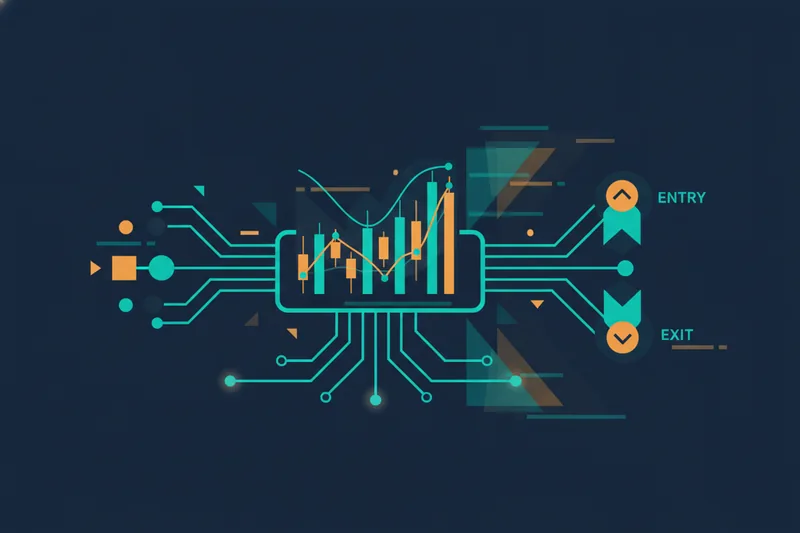
Under the hood, an AI scalping tool is evaluating a narrow set of inputs on a very short refresh cycle: price, volume, and a handful of technical indicators (moving averages, RSI, MACD, Bollinger Bands are common choices) alongside candlestick patterns like engulfing bars or dojis that suggest short-term reversals or continuations. None of this is exotic — the "AI" part is usually pattern-matching or weighting these inputs faster and more consistently than a human scanning a chart could, then converting the result into a signal with a stated confidence level.
Where confidence scores come from
A confidence score is the tool's estimate of how strongly current conditions match the pattern it was trained or configured to detect — for example, "78% confidence" that a breakout will follow a squeeze pattern. The number itself means little without knowing what it's measuring against: how many historical instances, over what data, and how the model defines "success." A high confidence score built on thin or convenient backtesting data tells you almost nothing. This is why the next section on backtesting quality matters more than the score itself.
Why stop-loss and take-profit levels matter for scalping speed
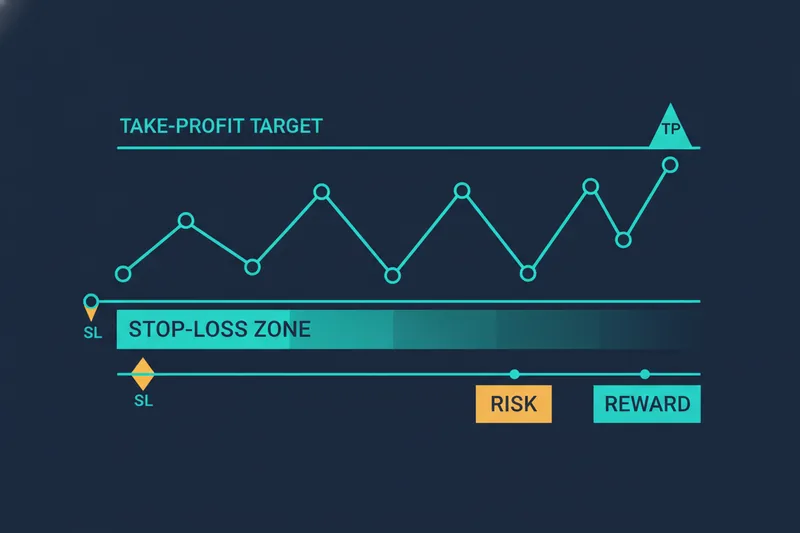
Because scalping trades last minutes, stop loss and take profit levels have to be set — and hit — automatically. There's no time to watch the trade and react manually. A stop-loss defines the maximum loss you'll accept before the position closes; a take-profit locks in gains at a predefined level. In scalping, both need to be tight and precise, because the profit target per trade is often small relative to the asset's normal volatility. If these levels are buried inside a black-box signal rather than visible as explicit rules, you can't verify whether they're sized sensibly for the instrument you're trading.
Why Backtesting Quality Decides Whether an AI Scalping Signal Is Trustworthy
Backtesting — running a strategy's logic against historical price data to see how it would have performed — is the single biggest differentiator between a signal you can trust and marketing noise. Two strategies can look identical on a sales page and behave completely differently depending on what data they were tested against.
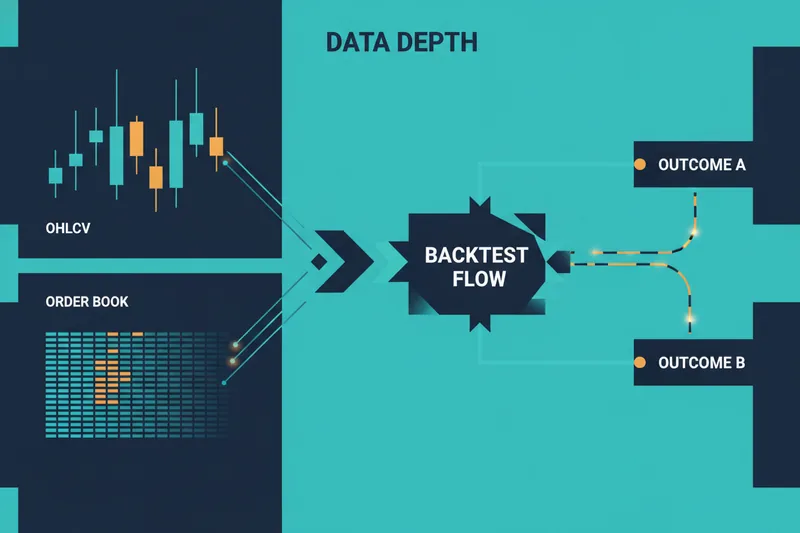
Most tools backtest against OHLCV data (open, high, low, close, volume per candle), which is fine for swing or trend strategies but coarse for scalping, where entries and exits often hinge on what happened inside a candle. More rigorous backtesting incorporates order-book-derived data — reconstructed bid/ask spreads and depth — which reflects the execution reality scalpers actually face: slippage, spread widening, and fill quality at the moment a rule triggers. A trading bot backtested only on OHLCV closes can show a clean equity curve that quietly assumes fills no real scalper would get. Both backtesting and forward testing (running the strategy live on a demo or small size before committing real capital) are necessary steps, not optional extras — skipping either one is how a strategy that "worked" in testing fails in practice.
Is AI Trading Actually Profitable?
There's no honest answer that doesn't start with "it depends on the strategy, not the label." AI trading tools aren't inherently more profitable than rule-based ones; they're a way of generating or filtering signals faster. Profitability comes down to whether the underlying logic has a real edge, verified through backtesting, and whether risk is managed so a string of losses doesn't wipe out the gains. One useful sanity check is the Sharpe ratio — a measure of return relative to volatility — where above 1.0 is considered acceptable, above 2.0 very good, and above 3.0 excellent. If a tool won't show you that kind of performance data, or won't let you see the confidence-score logic behind its signals, there's no way to judge whether "AI" is adding anything beyond a marketing label. Risk management, not the AI itself, is what separates a strategy that survives from one that doesn't.
Is Scalp Trading Profitable — and Is It Legal?
Is scalp trading profitable?
It can be, but the margin per trade is thin by design, which means costs matter disproportionately. Spread, execution speed, and fees eat into small per-trade gains faster than they would in a swing trade, so profitability depends heavily on execution quality and consistent risk sizing across dozens of trades, not on any single winning setup.
Is scalp trading illegal?
No — scalp trading is a legal, widely used trading style on regulated exchanges and brokers. It's sometimes confused with "layering" or spoofing, which are illegal manipulation tactics, but ordinary scalping — entering and exiting positions quickly based on your own analysis or automated rules — carries no legal issue in itself. The real risks are financial, not regulatory: over-trading, fee drag, and poor risk management.
How to Use AI for Scalping: A Step-by-Step Workflow
Step 1: Define entry, averaging, and exit conditions
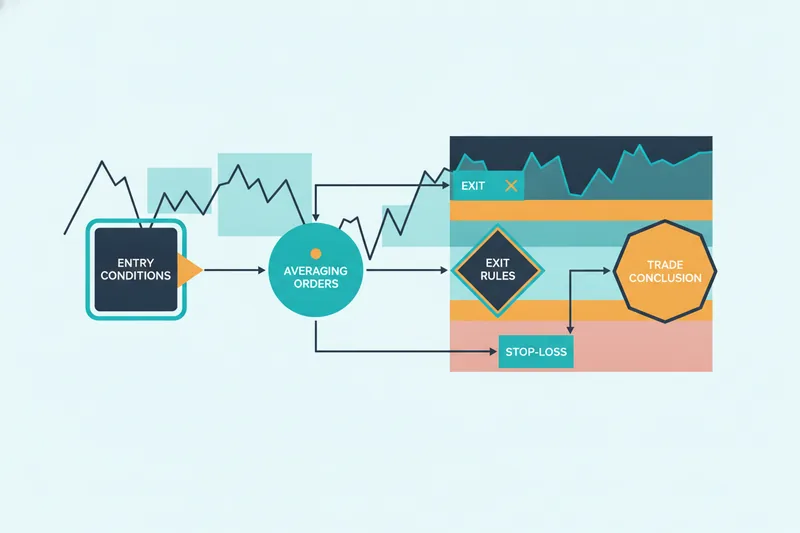
Start by laying out the full trade lifecycle, not just the entry. A deal map — a visual sequence showing entry conditions, any averaging orders (added positions if price moves against you before reversing), exit rules, and the stop-loss — makes the whole strategy inspectable at a glance instead of scattered across parameters. This matters because an averaging order is a distinct mechanism from a scheduled dollar-cost-averaging bot, which simply buys or sells at fixed intervals regardless of price; averaging into a position based on price conditions is a risk decision that needs its own visible rule, not a blind interval.
Step 2: Backtest before risking capital
Run the full deal map against historical data before it ever touches live capital. Where possible, test against both OHLCV and order-book-derived data, since scalping performance is sensitive to fill quality. Treat this as a mandatory gate, not a formality — a strategy that hasn't been backtested and then forward-tested on a small scale isn't ready, regardless of how confident the signal generator seems.
Step 3: Check "almost vs triggered" thresholds to cut false signals
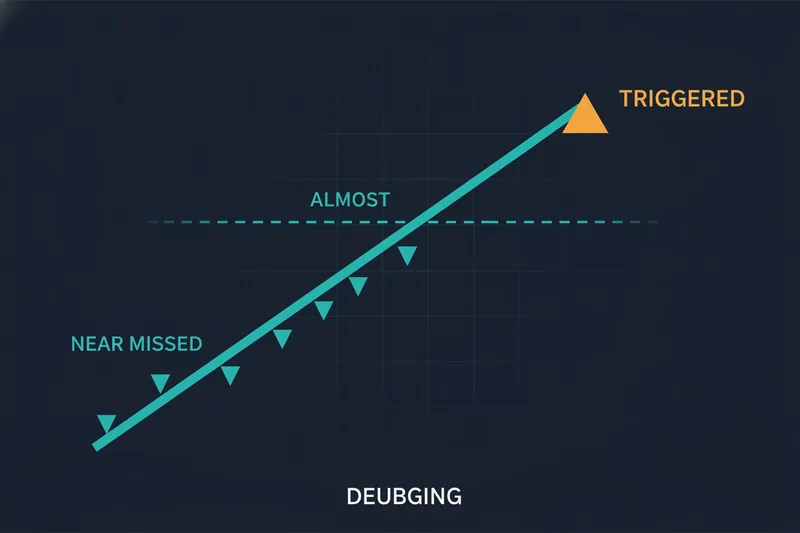
This is the step most tools skip entirely: look at how many times price came close to triggering a condition without actually triggering it. If a threshold is set so tightly that price constantly grazes it, you'll get noise-driven entries; if it's too loose, you'll miss real setups. A visual debugger that highlights the exact chart zone tied to each condition — and shows near-misses alongside actual triggers — lets you tune thresholds based on evidence instead of guessing at a parameter buried in a settings panel.
Best AI Tools for Scalp Trading: What to Actually Look For
The market splits into two broad categories. One is the black-box signal generator: upload a chart or connect an account, get a buy/sell alert with a confidence score, and no visibility into why. The other is the transparent builder, where you define the logic yourself using a no-code strategy builder and can see precisely which indicators, candlestick patterns, and thresholds produced each signal.
There's also a middle category worth knowing about: code-based automation platforms that let experienced users script and backtest strategies in languages like Python, offering full control but requiring programming knowledge most retail scalpers don't have. For a trader who wants transparency without writing code, the gap that matters is whether the tool has a visual debugger — something that shows exactly which chart zone and condition caused a trade, rather than asking you to trust a black-box confidence score. When evaluating any AI chart analysis tool or trading bot, ask specifically: can I see the rule that fired, on the chart, before I fund the account?
Risks and Limitations of AI Scalp Trading
AI scalping carries the same core risks as any automated strategy, amplified by speed. Overfitting — tuning a strategy so precisely to past data that it stops working on new data — is common when backtests are run without enough variety of market conditions. False signals spike during regime changes, when volatility or liquidity shifts and the patterns a model was calibrated on stop applying cleanly.
Risk management at the strategy level is what limits the damage: a cooldown after stop-loss — a forced pause before the bot can re-enter — prevents a bot from immediately re-triggering into the same losing condition repeatedly. Loss limits at the scenario level cap total drawdown before the strategy stops trading altogether. A widely cited risk framework, the 3-5-7 rule, caps risk per trade at 3%, total open risk at 5%, and requires a minimum 7% profit-to-loss ratio — a useful reference point for sizing scalping risk rather than an exact prescription. Note too that running a bot live, unattended, around the clock is a different reliability problem than testing it: a home computer can work for testing, but for live capital most serious setups rely on a VPS (a remotely hosted server) specifically because a home connection or machine failing mid-trade has real consequences.
FAQ: AI Scalp Trading Questions Traders Still Ask
Is scalp trading ai reliable enough to trust with real money? Only as reliable as its backtesting and its transparency. A tool that shows you why a signal fired, on real historical data including order-book conditions, is verifiable. One that only shows a confidence score is not.
How is a confidence score different from a backtest result? A confidence score is a real-time estimate for the current setup; a backtest result is historical performance across many past setups. A high confidence score with no backtest behind it is an opinion, not evidence.
Does backtesting guarantee future results? No. It's a necessary check, not a guarantee — market conditions change, which is why forward testing on small size is also required before scaling up.
What's the single biggest risk-management step scalpers skip? Setting a loss limit and cooldown after stop-loss at the strategy level, rather than relying on per-trade stops alone to control overall drawdown.
See exactly why a scalp signal would trigger — build and backtest your AI-assisted scalping strategy visually in Quberas before you risk real capital.