Best Backtesting Website & Tools for Trading 2025
Backtesting — running your trading strategy against historical price data to see how it would have performed — is the single most important step between having an idea and risking real capital. This guide covers the best backtesting websites and tools available in 2025, including free options for forex and crypto traders, and explains exactly what separates a useful platform from one that just looks impressive on a features page.
What Is Backtesting and Why Does It Matter?
How Backtesting Uses Historical Price Data
Backtesting is the process of applying a defined set of trading rules to historical price data — past OHLCV (open, high, low, close, volume) records — to simulate how a strategy would have performed over a chosen time period. Instead of risking capital to find out whether your logic works, you replay past market conditions and let the rules execute as they would in live trading.
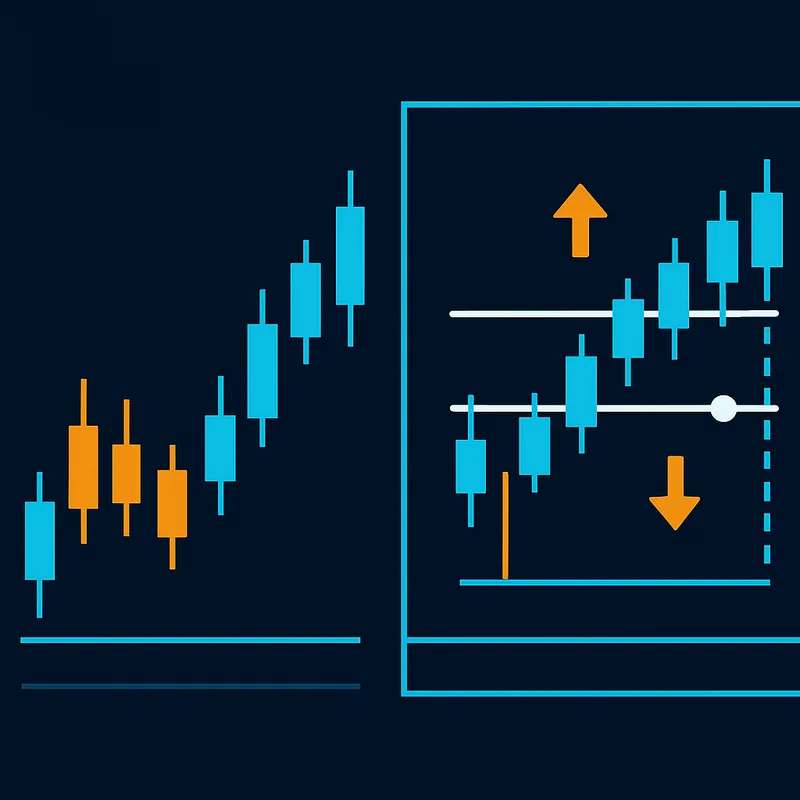
For forex and crypto traders specifically, this matters because both markets are volatile, fast-moving, and unforgiving of untested logic. A strategy that looks intuitive on a single chart can collapse the moment it meets a trending market, a ranging market, or a news spike. Backtesting surfaces those failure modes before they cost you money.
What Backtesting Can and Cannot Tell You
Backtesting validates that a strategy's rules produce acceptable results on past data. It does not guarantee future performance. The most important caveat is overfitting — the risk of tuning your rules so precisely to historical data that they stop working on new data. A strategy with a 90% win rate on two years of backtested data but zero forward-test validity is worse than useless; it creates false confidence. Good backtesting practice means testing across multiple market regimes, not just cherry-picking favorable periods.
Manual Backtesting vs Automated Backtesting: Which Should You Use?
What Manual Backtesting Gets Right (and Where It Falls Short)
Manual backtesting means scrolling through historical bars on a chart — one candle at a time — and recording trades by hand when your rules would have triggered. Tools like FX Replay are built specifically for this: they let you replay price action at custom speeds and mark entries and exits as you go.

The advantage is intuition. Discretionary traders who rely on pattern recognition and context can develop genuine market feel through manual replay. The disadvantage is everything else: it's slow (a single month of data can take hours to review), it's inconsistent (your judgment shifts between sessions), and it cannot tell you exactly why a rule triggered. If your entry depends on a moving average crossover plus a volume condition, manual replay cannot enforce both simultaneously — you're approximating.
Why Automated Backtesting Produces More Consistent Results
Automated backtesting applies your rules mechanically across the full data set. Every condition is evaluated the same way on bar one as on bar ten thousand. The output is a consistent set of performance metrics — win rate (percentage of trades that close profitably), maximum drawdown (the largest peak-to-trough equity decline), Sharpe ratio (return relative to volatility), and profit factor (gross profit divided by gross loss) — that give you an objective read on strategy quality.
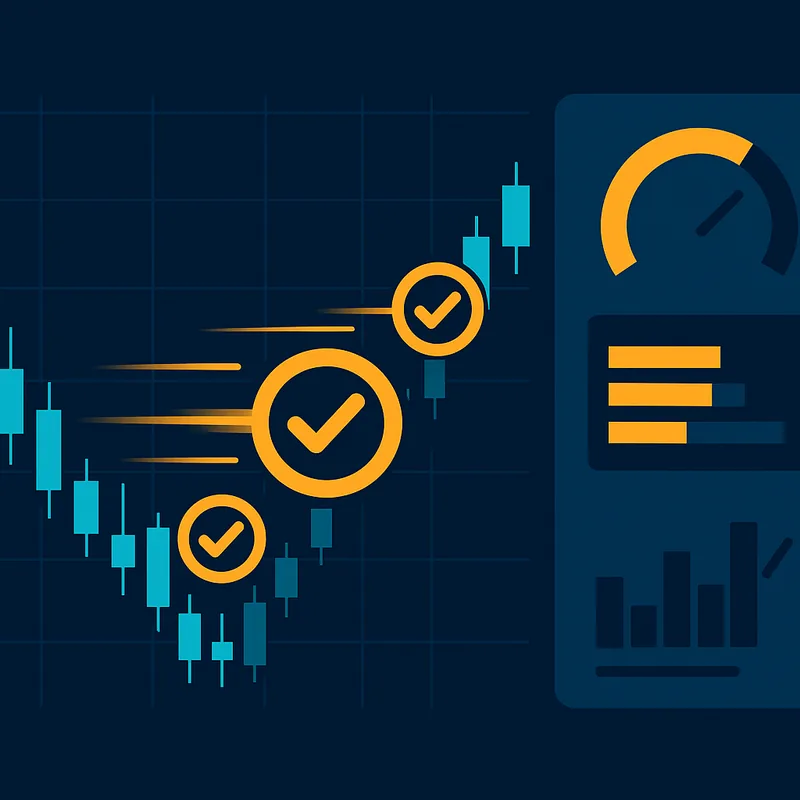
Speed is the other major advantage. What takes a manual trader days to review, an automated system processes in seconds.
The No-Code Middle Ground: Visual Strategy Builders
The traditional barrier to automated backtesting was code. Platforms like TradingView require Pine Script; MetaTrader requires MQL. If you're not a programmer, you were stuck with manual replay.
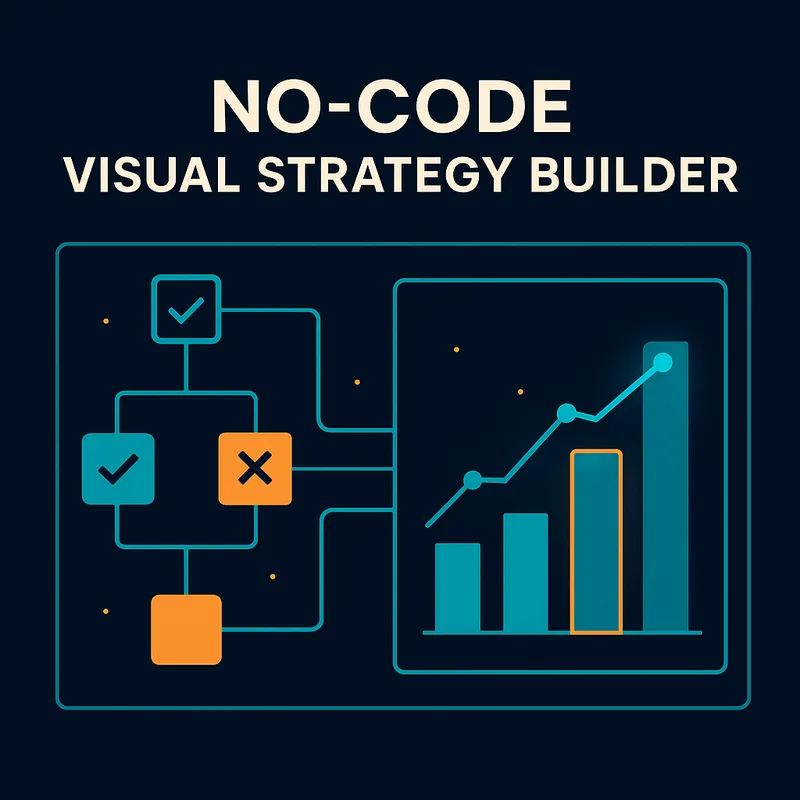
No-code strategy builders close that gap. A visual debugger — a tool that highlights exactly which chart zones triggered each rule — gives you the transparency of manual review with the consistency of automated execution. You can see, on the chart itself, why a trade opened or closed, without writing a single line of code.
Key Features to Look for in a Backtesting Platform
Before comparing specific tools, use this checklist to evaluate any platform objectively:
- Historical data quality and range — How far back does the data go? Is it tick-level, minute-level, or daily? Forex backtesting often requires fine-grained intraday data; crypto requires continuous coverage including weekends.
- Asset class coverage — Does it cover the markets you trade? Forex pairs, crypto spot/futures, stocks, or a combination?
- Performance metrics output — Does it report win rate, maximum drawdown, Sharpe ratio, and profit factor, or just a P&L curve?
- Strategy logic transparency — Can you see why each trade triggered, or do you just get results?
- Ease of strategy construction — Is coding required, or can you build logic visually?
- Free tier or trial — Can you test the platform meaningfully before paying?
- Backtest-to-live continuity — Can you launch the same strategy live without rebuilding it from scratch?
- Optimization tools — Does the platform support parameter sweeps or iteration without manual re-entry?
Best Backtesting Websites in 2025 (Free and Paid)
Quberas: Visual No-Code Backtesting with a Built-In Debugger
Quberas is a no-code visual strategy builder designed specifically for traders who want automated backtesting without programming. The core workflow runs through a drag-and-drop deal map — a visual canvas where you define entry conditions, averaging orders, exits, and stop-losses as connected logic blocks rather than code.
The condition builder supports nested logic: price conditions, indicator values, crossovers, and volume conditions can be combined in any order. Once built, the strategy backtests against historical data and the visual debugger highlights the exact chart zones where each condition triggered — so you can see, candle by candle, why a trade opened or closed. That level of transparency is what separates Quberas from parameter-buried platforms where results appear but logic stays hidden.
Free to try. Covers crypto markets. Strategy built in backtest mode launches directly to live — no rebuild required.
Manual Chart Replay Tools (FX Replay and Similar)
FX Replay and similar manual replay tools are well-suited to discretionary forex traders who want to build screen time and test pattern-based approaches. They're free or low-cost, easy to start with, and useful for developing intuition.
Their ceiling is the manual process itself. Rule-based strategies with multiple simultaneous conditions cannot be reliably tested by hand. For systematic traders, these tools are a starting point, not a complete solution.
Code-Based Platforms (TradingView, MetaTrader)
TradingView with Pine Script is a widely used backtesting environment for retail traders. Its data coverage is broad, its community is large, and its charting is excellent. The barrier is Pine Script — a proprietary language that takes real time to learn. TradingView offers both free and paid plans with varying feature access; check their current plan details for specifics on strategy limits and data availability.
MetaTrader (MT4/MT5) is the standard for forex automation. Its Strategy Tester is powerful and supports tick-by-tick simulation. Like TradingView, it requires MQL coding, and the interface is dated enough to create a steep learning curve for new users.
Both platforms are strong choices if you can code. If you can't, the time investment in learning the language often exceeds the time saved by automation.
Portfolio and Journal-Adjacent Backtesting Tools
Tools like Testfolio and trading journal platforms serve a different function: they analyze the performance of trades you've already taken, or model portfolio-level allocation. They're useful for reviewing historical trade logs but don't support rule-based strategy logic. If you want to test whether a specific set of entry and exit conditions works, these tools aren't the right fit.
Quick Comparison Table
| Platform | Asset Classes | Free Tier | No-Code | Automated Logic | Visual Debugger |
|---|---|---|---|---|---|
| Quberas | Crypto | Yes | ✓ | ✓ | ✓ |
| FX Replay | Forex | Yes (limited) | ✓ | ✗ | ✗ |
| TradingView | Forex, Stocks, Crypto | Yes (limited) | ✗ | ✓ | ✗ |
| MetaTrader | Forex | Yes | ✗ | ✓ | ✗ |
| Testfolio | Stocks, ETFs | Yes | ✓ | ✗ | ✗ |
Best Free Backtesting Websites for Forex
Forex backtesting has specific requirements: currency pair coverage, granular intraday data, and ideally spread modeling to simulate realistic execution costs. Daily OHLC data is insufficient for intraday strategies — the finer the data granularity, the more accurately the backtest reflects real conditions.
Free options for forex traders:
- FX Replay — free tier covers manual chart replay on major pairs. Good for discretionary testing; data history on the free plan is limited.
- TradingView — free account allows basic Pine Script strategy testing on forex pairs. Check TradingView's current plan page for the specific bar limits and feature restrictions that apply to each tier.
- MetaTrader — free to download; historical data available through broker connections. The Strategy Tester is free but requires MQL coding.
Free plans across all platforms share common limitations: shorter data history, fewer simultaneous strategies, and restricted data granularity compared to paid tiers. For a serious forex backtest covering multiple market cycles, a paid data source or paid platform tier is often worth considering.
Best Backtesting Tools for Crypto Traders
Crypto backtesting differs from forex in important ways: crypto markets run continuously, including weekends and holidays, volatility is significantly higher, and exchange connectivity matters — the same strategy can produce different results on different exchanges due to liquidity and fee differences.
Key considerations for crypto backtesting:
- Continuous data coverage — ensure the platform doesn't have gaps during low-liquidity hours or weekend sessions
- Exchange-specific data — backtesting on generic price feeds rather than exchange-specific data can introduce slippage errors
- Visual logic review — in volatile markets, understanding exactly when an entry or exit triggered is critical; a short difference in execution timing can mean a very different trade outcome
Quberas is built for crypto strategy construction and backtesting. Its no-code condition builder handles the complex nested logic that crypto strategies often require — combining RSI levels, volume spikes, and price crossovers in a single entry condition — and the visual debugger shows exactly where each condition was satisfied on the chart. For traders moving from manual crypto trading to systematic execution, that visibility is the key step.
How to Backtest a Trading Strategy Step by Step
Step 1–2: Define Your Rules and Pick Your Data
Start with complete, unambiguous rules. Vague rules ("buy when the market looks strong") cannot be backtested. Precise rules can: "Enter long when the 9 EMA crosses above the 21 EMA on the 1H chart and volume is above the 20-period average."
Define your entry conditions, exit conditions, and stop-loss level before touching any platform. Then choose your data range: at minimum, test across 12–24 months covering different market conditions (trending, ranging, high-volatility periods). For crypto, include at least one major drawdown period.
Step 3–4: Build the Logic and Run the Test
In a no-code platform, open the condition builder and construct your logic visually. Add your indicators, set crossover conditions, layer in volume filters, and connect them with AND/OR logic. In Quberas, this happens on the deal map — each condition block connects to the next, and the full logic chain is visible before you run anything.
Run the backtest. Review the output: win rate, maximum drawdown, profit factor, and Sharpe ratio. A profit factor above 1.5 and a maximum drawdown you could realistically tolerate in live trading are the minimum bars worth taking seriously.
Step 5–6: Debug, Optimize, and Avoid Overfitting
Use the visual debugger to inspect individual trades. Find the losses: did the rule trigger correctly, or did a condition fire in a context you didn't intend? Adjust the logic — not the parameters — based on what you observe.
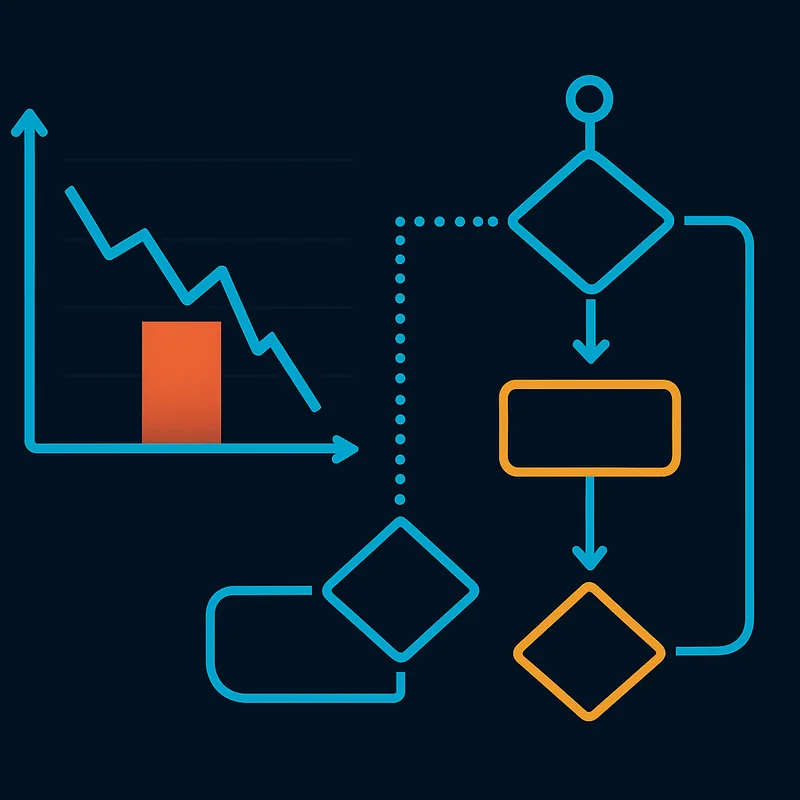
Strategy optimization means improving the underlying logic, not curve-fitting parameters to historical data. If you run many parameter combinations and pick the one with the best backtest result, you've overfit. A practical safeguard is to hold back a portion of your data as an out-of-sample test period and verify that your optimized strategy performs acceptably on data it has never seen. If results degrade sharply on that held-back period, the strategy is overfit.
Step 7: From Backtest to Live Launch
Once performance metrics are acceptable and the visual debugger confirms the logic fires correctly, move to paper trading — simulated live execution with real-time data but no real capital. Paper trading catches execution issues (slippage, latency, order type mismatches) that backtesting cannot simulate. After a statistically meaningful paper trading period, you can move to live.
Frequently Asked Questions About Backtesting
How Accurate Is Backtesting?
Backtesting is directionally accurate, not precisely predictive. It tells you whether a strategy's logic has historically produced positive expectancy. It cannot account for slippage, liquidity gaps, broker latency, or market regime changes. Treat backtest results as a necessary filter, not a performance guarantee.
What Historical Data Do I Need?
The data granularity you need depends on your strategy's timeframe. Intraday strategies require finer-grained data than swing strategies; the shorter your intended holding period, the more detail matters. Cover at least 2–3 years to include different market conditions. For crypto, ensure your data source includes continuous sessions and major volatility events.
How Do I Avoid Overfitting?
Reserve a portion of your historical data as a held-back out-of-sample set that you don't touch during strategy development. Only test against it once you've finalized your rules. If performance drops significantly on that unseen data, the strategy is overfit to the training period. Prefer simpler rules with fewer parameters — complexity increases overfitting risk.
Can I Backtest for Free?
Yes. TradingView's free tier, FX Replay's free plan, MetaTrader's built-in Strategy Tester, and Quberas's free trial all allow meaningful backtesting at no cost. Free tiers typically limit data history length and the number of simultaneous strategies, but they're sufficient for initial validation.
Backtesting vs Paper Trading: What Comes Next?
Backtesting uses historical data; paper trading uses live market data with simulated execution. Backtesting validates logic; paper trading validates execution. Both are required steps before live capital. A strategy that passes backtesting but fails paper trading usually has an execution problem — slippage, order sizing, or timing — not a logic problem.
Try Quberas free — build your strategy visually, backtest it against real historical data, and see exactly where every rule triggers on the chart before you go live.