Futures Trading Account Guide: Setup & Strategy
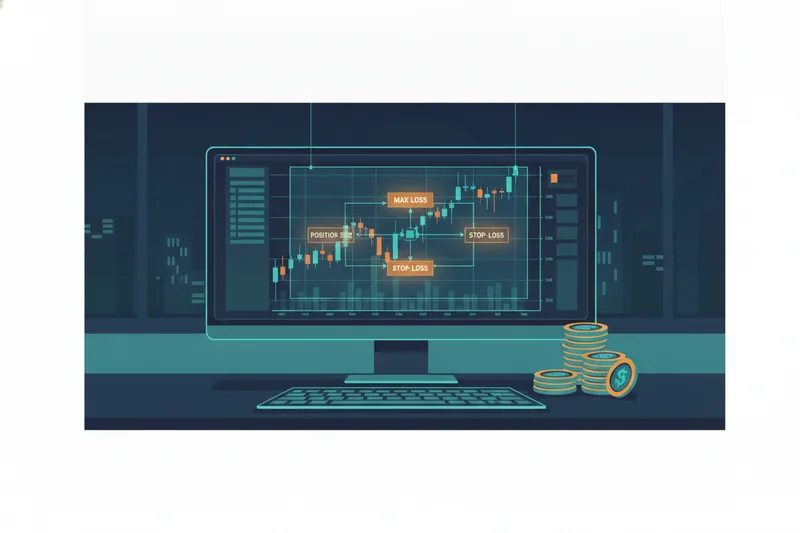
A futures trading account is a brokerage account specifically approved for trading standardized contracts on exchanges like the CME — and opening one is only half the job. The account gets you access to the market; it doesn't tell you how much capital you actually need, which broker fits your style, or how to turn a trading idea into something you can test before risking money. This guide covers both: the mechanics of margin, minimums, and broker selection, and the step most account-opening guides skip — building and backtesting an actual strategy once your account is funded.
What Is a Futures Trading Account?
A futures account lets you buy and sell futures contracts — standardized agreements to buy or sell an underlying asset (an index, a commodity, a currency pair, a bond) at a set price on a future date. Unlike a stock account, where you own shares outright, a futures account is built around contracts that expire, get marked to market daily, and are traded almost entirely on margin rather than paid for in full.
Futures Contracts vs. Stock Trading
When you buy a stock, you pay the full share price (or use margin borrowed against your existing equity). When you trade a futures contract, you post a good-faith deposit — margin — that's a fraction of the contract's notional value, and your account is credited or debited daily based on price moves. Futures also expire on fixed dates, forcing you to close, roll, or settle positions, something equity traders never have to think about.
Why Futures Accounts Are Regulated by the CFTC
Futures markets in the U.S. fall under the CFTC (Commodity Futures Trading Commission), a federal regulator distinct from the SEC, which oversees stocks. The CFTC, working with self-regulatory bodies like the National Futures Association, sets the rules your futures broker must follow for account approval, margin disclosure, and reporting. That's why opening a futures account involves a separate approval process and a different risk disclosure package than opening a stock brokerage account, even at firms that offer both. Once your account is approved and funded, the real work starts: turning a trading idea into rules you can actually test, which is the gap platforms like Quberas are built to close by letting you define that logic visually before it ever touches live capital.
Margin, Leverage, and Minimum Capital Requirements
Futures trading runs on a different capital logic than stock trading, and conflating the two is where most new futures traders miscalculate their risk.
How Much Money Do You Actually Need to Trade Futures?
There's no universal account minimum set by the CFTC — it's set broker by broker, and it varies by contract. Micro futures contracts (a tenth or less of the size of standard contracts) require far less margin than full-size ones, which is why many beginners start there. Expect initial margin requirements ranging from under $50 for some micro contracts to several thousand dollars for standard contracts on volatile instruments — the exchange sets a baseline and brokers often add a buffer on top.
Is $100 Enough to Start Trading Futures?
Technically, yes, in the sense that some brokers accept an opening deposit as low as $100. But a $100 account leaves almost no room for margin calls, drawdowns, or more than one micro contract at a time. It's enough to open a door, not enough to absorb a losing streak while you're still learning how a strategy behaves in live conditions.
Leverage: Amplified Gains and Amplified Risk
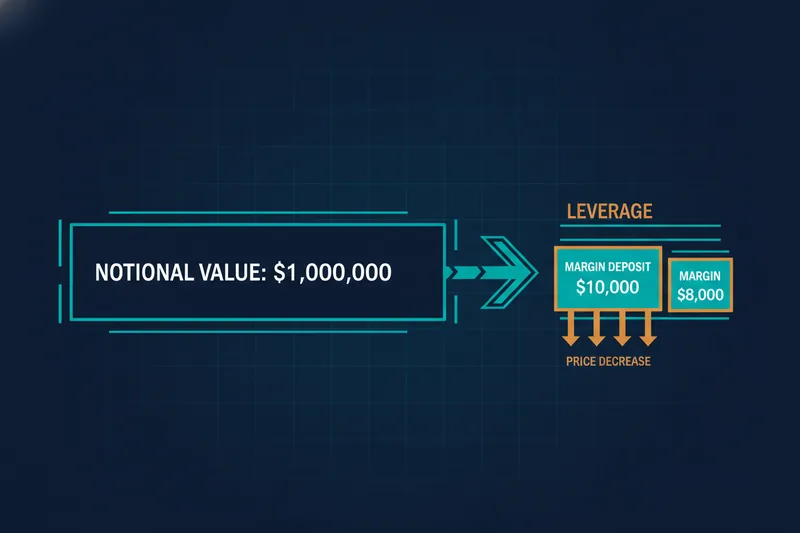
Leverage in futures comes from the gap between the contract's full notional value and the margin you post to control it — a small price move against you can erase a much larger percentage of your margin than the same move would against a fully-paid stock position. This is also why the stock market's $25,000 pattern day trader rule doesn't apply here: futures accounts follow their own margin and day trading rules, set by the exchange and broker rather than the SEC's equity threshold, and they can differ significantly contract by contract.
How to Open a Futures Trading Account
Application, Approval Levels, and Documents
Opening an account with a futures broker typically means completing an application that discloses your trading experience, income, and net worth, then signing a futures-specific risk disclosure. Brokers often tier approval by experience level — some contracts or options-on-futures strategies require a higher approval tier than basic long/short futures trades. Expect to submit identification, and in some cases proof of address and income documentation, before the account is cleared to trade.
Funding Your Account
Once approved, you fund the account by wire, ACH transfer, or check, and the broker allocates it against account minimums and margin requirements for the contracts you intend to trade. Funding is usually the fast part — most delays happen at the approval stage, not the deposit stage. Before you fund more than a test amount, check the broker's commissions schedule per contract, since fees compound quickly for anyone trading multiple times a day.
How to Choose a Futures Broker and Trading Platform
Comparing Commissions and Fees
Commission structures vary more in futures than in stock trading, since fees are usually quoted per contract, per side, rather than as a flat trade fee. Some platforms run a no-monthly-fee model with slightly higher per-contract commissions — for example, pricing as low as $0.39 per side on micro contracts and $1.29 per side on standard contracts under a pay-as-you-go plan — while others charge a platform subscription with lower per-trade costs. Which structure wins depends entirely on your trade frequency: high-frequency micro-contract trading favors low per-side fees; occasional standard-contract trading can tolerate a flat monthly cost.
Platform Features That Matter for Active Traders
A futures trading setup generally rests on three separate pillars: the execution platform itself, a reliable market data feed, and tools for reviewing and journaling performance after the fact. Don't judge a broker only on its order-entry screen — check whether real-time data is included or billed separately, and whether the platform gives you any way to review past trades systematically rather than relying on memory.
Risk Management and Day Trading Rules in Futures
Futures accounts don't carry the stock market's $25,000 pattern day trader threshold, but that doesn't mean they're unregulated at the trade level. Exchanges and brokers impose their own intraday margin requirements, position limits, and sometimes mandatory liquidation rules if your account falls below maintenance margin — and the CFTC requires brokers to disclose these clearly before you trade.
Beyond the regulatory floor, risk management in futures is largely self-imposed, and the accounts that survive drawdowns are usually run against a fixed rule set rather than gut feel. One commonly cited framework, the 3-5-7 rule, caps risk on any single trade at 3% of account equity, caps total exposure across all open positions at 5%, and targets a minimum 7% profit-to-loss ratio to keep winners outweighing losers over time. Whether or not you use that exact framework, the principle holds: define your per-trade and per-day risk limits before you're in a live position, not while you're watching it move against you.
From a Funded Account to a Tested Strategy: Where No-Code Automation Fits
A funded, approved account tells you nothing about whether your trading idea actually works. This is the step most broker guides stop short of — and it's where a no-code strategy builder becomes the practical bridge between "I have a rule in my head" and "I have evidence this rule performs." Quberas lets you build that logic as a visual deal map — connecting entry conditions, averaging orders, exits, and stop-losses on a chart-based flow — instead of writing and debugging code.
Backtesting a Futures Strategy Before Going Live
Backtesting runs your rules against historical price data to see how they would have performed, and it's a necessary step before committing capital — though it's not the only one; forward testing on live (but small or simulated) positions afterward is equally required to confirm a strategy holds up outside historical data. On Quberas, you backtest a strategy against historical data directly on the deal map you've built, so you can compare variations of entry or stop-loss logic before deciding which version earns real capital.
Visually Debugging Entry, Exit, and Stop-Loss Conditions
The recurring failure mode in manual and even automated trading isn't a bad idea — it's false signals: entries triggered by noise rather than a real setup. Quberas' visual debugger highlights the exact chart zones tied to each condition in your strategy, including how close a threshold came to triggering without actually firing, so you can tighten a rule instead of guessing why a trade fired when it shouldn't have.
Futures Trading Strategies for Beginners
Beginner futures strategies tend to fall into a handful of well-worn categories rather than requiring novel invention: trend-following, which stays with an established directional move; breakout trading, which enters when price clears a defined range; and range or gap trading, which trades reversion within (or reaction to) a bounded price zone. Each of these can be expressed as an explicit rule set — a moving average crossover for trend-following, a price level break with volume confirmation for a breakout strategy — rather than a discretionary judgment call made in the moment.
That's precisely the translation a no-code strategy builder is for: instead of deciding in real time whether "this looks like a breakout," you define the exact price and volume conditions that qualify as one, backtest them, and let the same rule fire consistently every time it's met — with risk management thresholds like stop-loss and position sizing built into the same deal map rather than applied as an afterthought.
Frequently Asked Questions
Is $100 enough to trade futures? It's enough to open some accounts, since certain brokers accept deposits as low as $100, but it only covers one or two micro contracts with no cushion for drawdowns. Treat it as a starting point for learning the mechanics, not as working capital for a real strategy.
Do you need $25,000 to trade futures? No. The $25,000 pattern day trader minimum is an equity-market rule under FINRA/SEC oversight; it doesn't apply to futures accounts, which are governed instead by CFTC-regulated margin and day trading rules that vary by broker and contract.
How much are futures trading commissions? Commissions are usually quoted per contract, per side, and can be under a dollar on micro contracts with some no-monthly-fee pricing structures, or bundled into a platform subscription. Compare both models against your expected trade frequency before choosing.
How does leverage work in futures trading? Leverage comes from posting margin that's a fraction of a contract's full value, which means small price moves produce proportionally larger swings in your account equity than an unleveraged stock position would.
Once your futures account is funded, try Quberas free to visually build and backtest your first strategy before you risk real capital.