Ban on Congressional Prediction Market Trading Explained
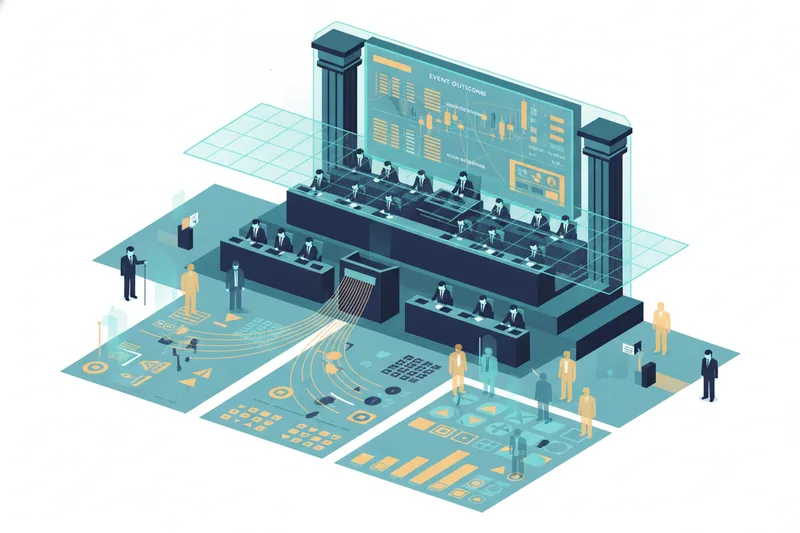
Prediction markets let people trade directly on the outcome of real-world events, and Congress is now moving to stop its own members from doing exactly that — while leaving everyday traders on Kalshi and Polymarket completely untouched. The Senate has already adopted a rule barring senators and certain staff from trading in these markets, and a separate House bill is working through committee to extend similar restrictions to representatives. Neither applies to the general public. If you trade prediction markets or run rule-based strategies of your own, the short version is: nothing about how you place a trade has changed.
What Are Prediction Markets? Kalshi and Polymarket Explained
A prediction market is a trading venue where the product being traded isn't a stock or a coin — it's the outcome of a future event. Traders buy and sell event contracts: standardized yes/no positions that settle at a fixed value if a specified outcome happens (an election result, a Fed rate decision, an economic data print) and at zero if it doesn't. The contract's price, typically expressed in cents, reflects the market's collective estimate of that outcome's probability at any given moment.
Kalshi operates as a U.S.-regulated exchange for these contracts, listing markets on everything from interest rate decisions to weather events. Polymarket built its user base around crypto-settled prediction markets and, after previously running largely outside direct U.S. oversight, has now received approval from the Commodity Futures Trading Commission to resume limited U.S. operations through a registered intermediary — placing it under the same kind of regulatory umbrella as domestic exchanges rather than outside it. On both platforms, traders can open and close positions before settlement as new information shifts the implied odds, not just hold until the event resolves.
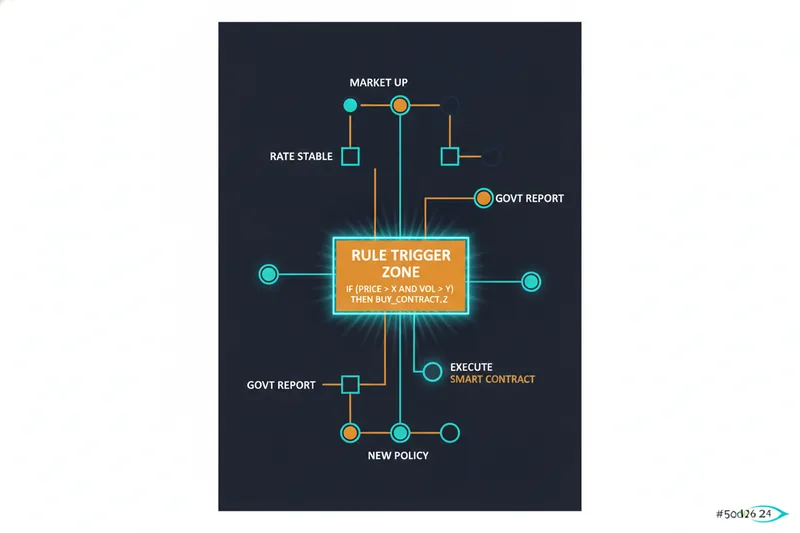
For everyday traders working these markets, the appeal is the same as it is for stocks or crypto: knowing exactly which condition triggered a position rather than guessing. That's the same principle behind no-code tools like Quberas, which let retail traders define and visualize their own rule-based logic directly on a chart instead of trading on hunches or opaque signals.
What the Ban Covers and Who It Applies To
The core restriction is narrow by design: it targets members of U.S. Congress and their staff, not the public trading on the same platforms. The Senate rule change already bars sitting senators and senior aides from opening new positions in event contracts tied to political, legislative, or policy outcomes — the categories of markets where a lawmaker's own vote or committee access could directly move the result they're betting on.
The rationale is straightforward: a senator voting on a bill while holding a financial position tied to that bill's outcome is a textbook conflict of interest — a situation where someone's official duties and personal financial stake could pull in different directions. The House Financial Services Committee has been developing parallel legislation aimed at closing the same gap for representatives, since House members currently fall outside the Senate's internal rule entirely.
Who's exempt matters just as much as who's covered. Retail traders, financial professionals, journalists, and anyone else without a congressional vote or committee seat are not part of either the Senate rule or the pending House proposals. The restriction is about privileged access to non-public legislative information, not about the mechanics of the trade itself.
Timeline: Senate Rule vs. House Bill Action
It helps to separate what's already binding from what's still being debated, since headlines often blur the two.
- Senate: The rule change is already in effect. It's an internal chamber rule, not a federal statute, meaning it governs Senate conduct directly and took hold without needing a full legislative process or a presidential signature.
- House: No equivalent rule exists yet. Instead, a bill — most visibly the Stop Lawmakers from Predicting Act, introduced by Representative Bryan Steil — has been advancing through the Committee on House Administration. Committee advancement means the bill has cleared an initial procedural hurdle, but it still needs a vote from the full House, a companion or reconciled Senate bill, and a presidential signature before it would carry the force of law.
In plain terms: senators already operate under a real restriction, while representatives are currently watching legislation move through the process rather than living under a finalized rule of their own.
Why Lawmakers Are Pushing to Ban Congressional Prediction Market Trading
The push stems from the same insider trading concerns that have shadowed congressional stock trading for years, now extended to a newer asset class. Lawmakers routinely receive briefings, committee testimony, and regulatory previews well before that information becomes public. A senator who knows a policy shift is imminent could, in theory, take a position in a prediction market tied to that exact outcome — a conflict of interest that has nothing to do with skill and everything to do with access.
Supporters of the restrictions frame this as a public trust issue as much as a legal one: even the appearance that lawmakers might profit from privileged knowledge erodes confidence in Congress generally, independent of whether any individual trade was actually improper.
How This Compares to the Existing Stock Trading Ban (STOCK Act)
The STOCK Act, passed over a decade ago, already governs how members of Congress handle personal stock trading. It doesn't ban lawmakers from trading stocks outright — it requires them to publicly disclose trades within a short window after execution, creating a paper trail regulators, journalists, and voters can scrutinize after the fact.
The prediction market restrictions take a different approach. Rather than relying on after-the-fact disclosure, the Senate rule and the pending House proposals aim to prevent the trades from happening in the first place, at least in categories tied to political or policy outcomes. That's the key distinction: the STOCK Act is a transparency-through-disclosure model, while the new prediction market rules lean toward outright prohibition in a narrower, more directly conflicted category of markets.
Disambiguating the Competing Bills
Several similarly named proposals have circulated, and news coverage often uses their names interchangeably even though their scope and status differ.
| Bill | Sponsor / Origin | Scope | Status |
|---|---|---|---|
| PREDICT Act | Rep. Bryan Steil | Bars members of Congress and covered staff from trading event contracts tied to political or policy outcomes | Advancing through House Financial Services Committee |
| Stop Lawmakers from Predicting Act | House sponsors (companion effort) | Similar prohibition on congressional prediction market trading, framed as a direct counterpart to stock trading restrictions | Introduced; tracking alongside the PREDICT Act |
| Public Integrity in Financial Prediction Markets Act | House sponsors (separate proposal) | Broader integrity-focused framing, addressing disclosure and conflict-of-interest standards around prediction markets | Introduced, earlier in the legislative process |
None of these bills has been signed into law. They represent overlapping attempts to solve the same problem, and it's plausible one gets folded into another or replaced by a Senate companion bill before anything reaches a floor vote.
Constitutional and Enforcement Questions
Even if a House bill passes, enforcement raises real questions. The Senate rule is enforced internally, through chamber ethics processes rather than criminal prosecution — a violation is a matter for the Senate itself to handle, not a case brought in federal court. Any House statute would likely need its own enforcement mechanism, whether through congressional ethics committees, mandatory divestment requirements, or civil penalties.
Constitutional debates have also surfaced, particularly around the Speech or Debate Clause, which shields lawmakers' legislative acts from certain kinds of legal scrutiny, and around whether restricting a lawmaker's personal trading activity implicates broader speech or property rights. These are open legal questions rather than settled ones, and how narrowly or broadly any final law is written will shape how much of a fight it draws.
What This Means for Retail Prediction Market and Algo Traders
If you trade on Kalshi or Polymarket as a private individual, none of this changes anything about your account, your trades, or your access to these markets. The restrictions are aimed squarely at members of Congress and covered staff — retail traders were never in scope, and nothing currently moving through the Senate or House proposes changing that.
What this moment does highlight is a broader theme worth applying to your own trading, regardless of legislative outcomes: rule-based clarity beats hidden logic. Lawmakers are being asked to operate under trading rules that are visible and accountable rather than opaque. That's the same standard worth holding your own strategies to — knowing precisely why a trade triggered, testing that logic against historical data before risking capital, and being able to point to the exact condition, not a vague hunch, behind every entry and exit. If you're building your own systems, that means understanding how to backtest a strategy before going live, how a visual debugger can show you which chart conditions actually fired a trade, and how risk controls fit into the overall flow of a strategy rather than being bolted on as an afterthought.
Frequently Asked Questions
Does this ban affect me as a retail trader? No. The Senate rule and the House bills target members of Congress and their staff specifically because of their access to non-public legislative information. Retail accounts on Kalshi, Polymarket, or any other platform are unaffected.
Is prediction market trading illegal for Congress now? Not universally. It's already restricted for senators under the adopted Senate rule. For House members, it remains legal until a House bill passes, is reconciled with any Senate companion, and is signed into law — none of which has happened yet.
What happens next in the House? The PREDICT Act and related proposals still need a full House floor vote, and likely a matching or reconciled Senate bill, before any restriction on representatives becomes binding law. Until then, House members operate without a formal prohibition, though public pressure to match the Senate rule is likely to continue.
Whatever happens with these bills, the underlying case for trading on transparent, rule-based logic doesn't change. Quberas lets you build and backtest fully transparent, rule-based trading strategies — so no matter how regulations around market transparency evolve, you always know exactly why a trade triggered. Start building a strategy free.