FintechZoom.io Stock Market Course Review
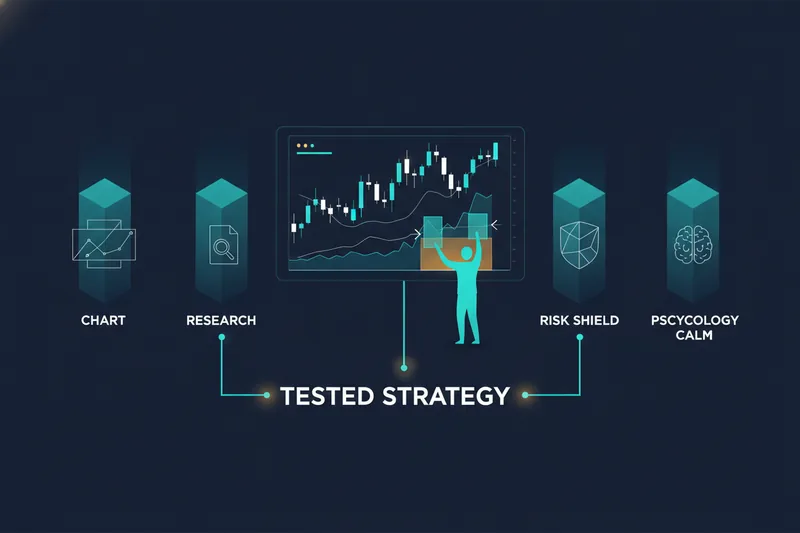
The FintechZoom.io Stock Market Course is a video-based education program covering technical analysis, fundamental analysis, risk management, and trading psychology, sold in tiers that range from a standalone stock trading course up through bundled "Investment Mastery" and "Trading Mastery" packages. It's a legitimate curriculum for someone who has never systematically studied the market, but the curriculum alone won't tell you whether a strategy actually works — that requires testing, which is the step this review focuses on after covering what you get, what it costs, and who it suits.
What Is the FintechZoom.io Stock Market Course?
FintechZoom.io positions itself as a financial media and education brand, and its Stock Market Trading course is one of several paid products it sells alongside market news content. The course is delivered as a series of pre-recorded video modules, typically organized into a self-paced dashboard rather than live cohorts, which means you move through lessons on your own schedule and revisit sections as needed.
It doesn't stand alone: FintechZoom.io also markets an Investment Mastery course (broader portfolio and asset-allocation focused) and a Trading Mastery course (more active, shorter-timeframe trading), and the Stock Market Trading course sits between the two — narrower than general investing education, less intensive than a full trading-mastery track.
Who Created the Course and What It Promises
The course promises to take a beginner from not knowing how to read a chart to being able to plan trades using technical and fundamental methods, with risk management and psychology folded in as supporting modules. That's a reasonable promise for the price of admission, but it's worth being precise about what "promise" means here: the course teaches concepts and frameworks. It does not, by itself, validate that any specific rule set — say, a moving-average crossover or a 7% stop-loss rule — actually performs well on real price history. That gap between learning a rule and knowing if it holds up is exactly where a tool like Quberas becomes relevant, since it lets a trader turn a lesson into a rule that can be checked against data rather than taken on faith.
Course Curriculum and Modules
The curriculum is built around four teaching pillars, which is a fairly standard structure for retail trading education.
Technical and Chart Analysis Modules
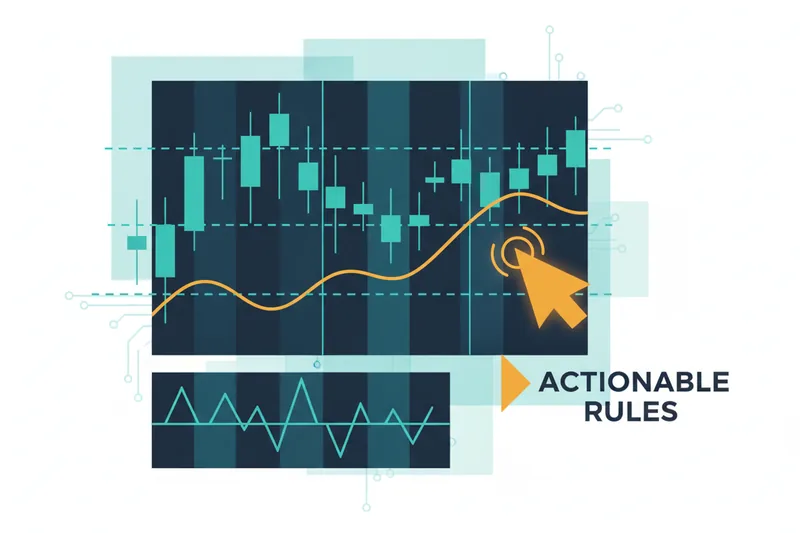
This section covers chart analysis fundamentals: candlestick patterns, support and resistance, trend lines, and common indicators (moving averages, RSI, MACD). It's presented as the practical, chart-reading backbone of the course, and it's where most of the actionable "rules" a student walks away with actually live — things like "buy when price crosses above the 50-day average" or "exit if RSI crosses below 70."
Fundamental Analysis and Market Research
The fundamental analysis modules shift from price action to company and macro research: reading earnings reports, valuation ratios, and sector or economic indicators that might justify a longer-term position. This is lighter-touch than the technical section in most course structures of this type, functioning more as context for why a stock might be worth watching than as a standalone trading system.
Risk Management and Trading Psychology Lessons
Risk management lessons address position sizing, stop-losses, and diversification — the mechanics of not blowing up an account on a single bad trade. Trading psychology covers the behavioral side: discipline, avoiding revenge trading, and sticking to a plan under stress. These two modules are often the most valuable for beginners and the most skipped by students eager to get to "the strategy" — which is a mistake, since a technically sound rule executed with poor risk control or poor discipline tends to fail anyway.
Pricing and Plans
FintechZoom.io's course pricing follows a tiered model: the standalone Stock Market Trading course sits at one price point, while the Investment Mastery and Trading Mastery bundles cost more and add broader coverage or additional resources. Because course pricing and promotional terms on platforms like this change fairly often, the specific dollar figures and any refund window or access-length terms should be confirmed directly on FintechZoom.io before purchasing — treat any third-party number you see elsewhere as approximate rather than current. What matters more for your decision is what each tier includes: if you only want the stock-specific curriculum, the entry tier covers the core four pillars; the higher tiers layer on investing-specific or trading-specific material you may not need if your goal is simply to learn and test one strategy type.
From Course Theory to a Tested Strategy: Closing the Practice Gap
This is the step almost every course review skips, and it's the one that determines whether the money you spent on education actually pays off.
Turning a Lesson Into a Visual Rule
Say the course teaches you a rule like "enter when price closes above the 50-day moving average and RSI is below 40" or a stop-loss rule for cutting losses. Written down, that's a sentence. Traded live without testing, it's a guess. The missing middle step is converting that sentence into a defined, checkable rule — which is what a no-code strategy builder is for. In Quberas, you connect the indicators and conditions the course describes (moving average, RSI, price crossovers) into a visual "deal map" that lays out entry, averaging, exit, and stop-loss logic as connected stages, so the rule from the video becomes something you can actually inspect rather than something you're trusting from memory.
Backtesting the Strategy Before Trading It Live
Once the rule exists as a defined structure, it needs to be run against historical data before it touches real capital. Backtesting — testing a rule set against past price data to see how it would have performed — is one of two stages a strategy is generally expected to pass before it's considered ready for live trading, the other being forward testing on current, unseen data. Quberas runs a strategy's logic against historical OHLCV data (or, where available, more granular bid/ask data) so you can see win rate, drawdown, and trade frequency before deciding whether the course's rule matches your risk tolerance.
Spotting False Signals With a Visual Debugger
The other problem with learning a rule from a video is that you don't see where it almost triggers versus where it actually triggers — and that gap is where false signals hide. Quberas's visual debugger highlights the exact chart zones tied to each condition, so you can see not just "trade opened here" but "condition was 90% met here and didn't fire," which makes it possible to tighten a threshold instead of guessing why a strategy feels noisy.
Pros and Cons of the FintechZoom.io Stock Market Course
Pros:
- Covers all four core pillars — technical analysis, fundamental analysis, risk management, trading psychology — rather than just chart patterns.
- Self-paced video format suits people learning around a job or other schedule.
- Tiered structure (standalone course vs. Investment/Trading Mastery bundles) lets you scope the spend to what you actually need.
Cons:
- Course pricing and terms aren't fixed publicly in a way third parties can verify reliably — check current terms directly before buying.
- Fundamental analysis coverage tends to be introductory rather than deep enough to build a standalone valuation practice.
- Like most video courses, it teaches concepts but doesn't include a way to verify a taught strategy against real market data before you trade it.
Who Is It For, and Is It Worth It?
The Stock Market Trading course fits two fairly different readers well: a complete beginner who needs the technical analysis, fundamental analysis, risk management, and trading psychology fundamentals in one structured place, and a self-directed trader who already trades manually but wants a refresher before systematizing their approach. It's a weaker fit for someone who already has solid chart-reading skills and just wants advanced, strategy-specific material — the course's breadth works against it there.
Is it worth it? For the beginner case, yes, assuming the current price sits in line with comparable retail trading courses. For the trader looking to systematize, it's worth it only if you follow through and actually test the rules it teaches rather than trading them straight off the video.
Alternatives to FintechZoom.io: Course-Only vs. Hands-On Strategy Building
Other Trading Education Platforms
Course-only alternatives include broad marketplaces like Udemy, where individual instructors sell trading courses at lower price points but with far less quality control — curriculum depth and instructor credibility vary enormously from listing to listing. FintechZoom.io's advantage over a Udemy course is a more consistent, structured pillar-based curriculum; its disadvantage is a narrower selection if you want a very specific niche strategy taught.
Tools That Let You Backtest What You Learn
Automated and semi-automated trading tools generally fall into a few categories: full coding environments, no-code/low-code builders, signal-to-execution layers, and pre-built bot marketplaces. Some strategy-building platforms, like AlgoBuilder, offer backtesting and deployment but rely on code (Python) rather than a visual interface, which raises the barrier for someone coming straight out of a course with no programming background.
| Approach | What it gives you | What it doesn't give you |
|---|---|---|
| FintechZoom.io course | Structured education across 4 pillars | A way to test taught strategies |
| Udemy courses | Cheap, varied topics | Inconsistent quality, no testing tools |
| Code-based platforms (e.g., AlgoBuilder) | Backtesting and automation | Requires programming knowledge |
| Quberas (no-code builder) | Visual rule-building, backtesting, debugger | Not a course — assumes you bring the strategy idea |
The practical path is combining a course for concepts with a no-code strategy builder for validation, rather than treating either as a complete solution on its own.
Final Verdict and FAQ
FintechZoom.io's Stock Market Trading course is a reasonable, structured starting point for someone who wants the fundamentals of technical analysis, fundamental analysis, risk management, and trading psychology in one place. It's not a scam, but it's also not a shortcut to profitable trading by itself — no course is. The real value depends on what you do after finishing it.
Is the FintechZoom.io Course Legit?
Based on its structure — a defined curriculum across recognizable trading education pillars, delivered through a standard video-course format with tiered pricing — it reads as a legitimate education product rather than a scheme. As with any paid course, verify current pricing, refund terms, and instructor credentials directly on the site before paying, since third-party summaries (including this one) can lag behind changes the company makes.
What's the Best Way to Learn Stock Trading?
There isn't a single best stock trading course for everyone — it depends on whether you need foundational education, advanced strategy design, or purely execution tools. The most reliable pattern, regardless of which course you pick, is: learn the concept, define it as a specific rule, and test that rule against historical data before trading it with real money.
Take a strategy concept from the course — a moving-average crossover, a 7% stop rule, an RSI threshold — and see it built as a visual, backtestable rule instead of a guess. Start free with Quberas.