Prediction Market: Event Contracts for Systematic Traders
A prediction market is a trading venue where the product isn't a stock or a commodity but the outcome of a real-world event — who wins an election, whether the Fed cuts rates at its next meeting, whether a named storm makes landfall by a given date. Traders buy and sell event contracts tied to that outcome, and each contract's price moves between roughly $0 and $1 (or 0 and 100 cents) as it reflects the market's live estimate of how likely the event is. Kalshi, Polymarket, and the newer prediction markets built into Robinhood have turned this from an academic curiosity into a retail-accessible trading category. This article explains how the mechanism actually works, whether trading it is legal, and — most importantly for anyone used to testing an idea before risking money on it — how to approach event contracts with defined rules instead of a gut call.
What Is a Prediction Market?
An event contract typically pays out $1 if a specific outcome occurs and $0 if it doesn't. If "Yes" shares on a contract trade at $0.62, the market is implicitly pricing that outcome at a 62% probability — that price is the odds/implied probability, expressed as a number you can trade against rather than a sportsbook's fractional line. Kalshi operates as a CFTC-regulated exchange offering these contracts on economic, weather, and political events. Polymarket runs on crypto rails and covers a broader, faster-moving set of topics, with its access model for U.S. users shaped by ongoing regulatory developments. Robinhood has recently layered prediction markets into its existing brokerage app, giving traders who already hold stocks and options a familiar interface for the same contract structure. The shared vocabulary across all three is what matters: a contract, a price that behaves like a probability, and a resolution date. For a self-directed trader, the real question isn't just "will this happen" — it's whether you're pricing that question with a repeatable process, which is the same discipline tools like Quberas apply to any market: define the conditions first, then test whether they actually hold up.
How Do Prediction Markets Work?
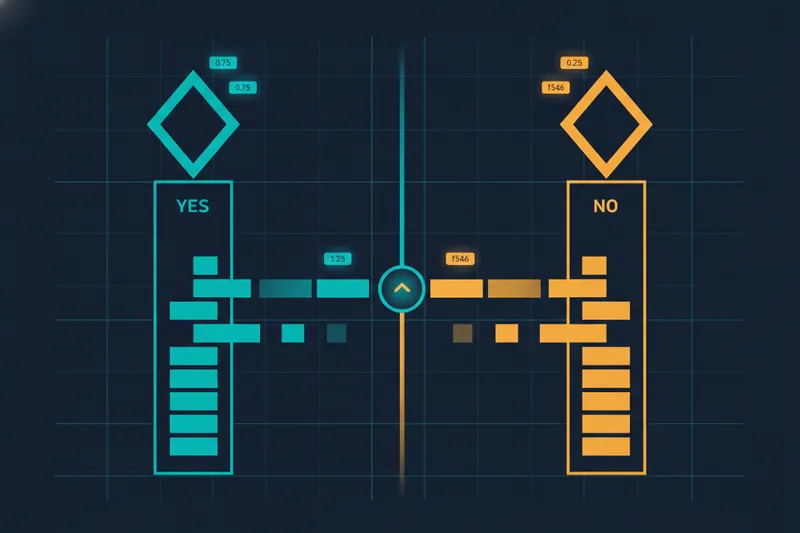
A prediction market functions like a continuous auction on a yes/no question. Buyers and sellers post orders on "Yes" and "No" shares, and the price where those orders match becomes the market's current probability estimate.
How Contract Prices Reflect Probability
Because a contract settles at $1 or $0, its live price is a direct readout of what traders collectively think the odds are. If new information shifts sentiment — a poll release, an economic report — buyers reprice the contract almost immediately, the same way an order book reprices a stock on news. Market liquidity determines how reliable that price is: a thinly traded contract can swing several cents on a single order, producing a probability estimate that says more about who happened to be trading than about the actual likelihood of the event. Deep, active contracts on well-covered events tend to track probability more tightly than niche or newly listed ones.
What Happens When an Event Resolves
When the underlying event occurs (or definitively doesn't), the exchange settles every open contract at $1 or $0 based on the outcome, and positions close automatically — there's no expiry chart pattern to read, just a binary price settlement. Traders holding a losing side lose their full stake in that contract; traders holding the winning side collect the difference between their entry price and $1. This settlement step is why entry price matters more than it might in a market where you can exit early at a small loss — once resolution hits, the price conversation is over.
Are Prediction Markets Legal?
Legality depends heavily on structure and jurisdiction. Kalshi operates under CFTC regulation as a designated contract market, which is why it can legally list event contracts to U.S. retail traders and why its contract terms are standardized and exchange-cleared. Robinhood's prediction markets offering similarly routes through CFTC-regulated infrastructure, which is what allows it to sit inside a mainstream U.S. brokerage app. Polymarket's relationship with U.S. regulators has shifted over time, including changes to how it handles U.S. user access, so the rules governing it don't map cleanly onto a single, static answer. The practical takeaway: regulatory status isn't uniform across the category, it's platform-specific and evolving, and it's worth confirming which structure — and which jurisdiction's rules — you're trading under before assuming one platform's terms apply to another.
Prediction Markets vs. Gambling
The comparison to gambling comes up constantly, and it's not baseless — both involve a payout tied to an uncertain outcome. The difference is in how the position gets sized and entered. Discretionary betting means deciding in the moment, based on feel, headlines, or a hunch, with no consistent rule for when the edge is actually favorable. Rules-based decision-making means defining, in advance, the specific conditions under which you'd enter — for instance, only buying "Yes" when the implied probability sits below your own estimate by a set margin, or only entering after a liquidity threshold is met. The gambling framing tends to stick to prediction markets because most retail activity on them today is discretionary. What separates a trader from a bettor isn't the market — it's whether the logic behind each position is written down, repeatable, and checkable against past data, rather than reconstructed after the fact to justify a feeling. That transparency of logic is the whole difference between a wager and a testable trading decision.
Popular Prediction Market Platforms
The category is still young, so coverage is uneven rather than exhaustive. Kalshi leans toward economic data, weather, and policy-driven contracts under its CFTC-regulated structure. Polymarket covers a wider range of topics — politics, sports, entertainment, crypto-native events — settled and traded via crypto rails, with a global user base and access terms that have changed as its regulatory footing has evolved. Robinhood's prediction markets bring a narrower initial contract set to an audience that's already trading equities and options in the same app. Beyond these three, crypto prediction markets built on decentralized infrastructure are emerging as a smaller, more experimental corner of the space, often with thinner liquidity and less standardized settlement than the larger regulated venues. None of these platforms are interchangeable — contract selection, liquidity depth, and regulatory footing all differ enough that a strategy tuned for one won't automatically transfer to another.
How to Trade on Prediction Markets
Placing a trade starts with reading the current price as a probability, not a stock chart pattern. If a contract trades at $0.30 on "Yes" and you believe the true likelihood is closer to 45%, that gap is your thesis — you're betting the market is underpricing the outcome. Position sizing should account for the fact that a losing contract typically goes to zero rather than drawing down gradually, so risking a fixed, small percentage of capital per contract matters more here than in markets where you can average a modest loss. Timing entries around new information — a data release, a scheduled event — is common, since that's when mispricing is most likely to appear and correct. Arbitrage opportunities occasionally show up when related contracts across platforms, or "Yes" and "No" prices on the same contract, don't sum to $1 net of fees; trading costs matter here, since per-contract fees and spreads on event contracts can erase a thin arbitrage edge before it's realized. Exit timing is simpler than in most markets: you either hold to resolution or sell your position early if the market has already moved in your favor and you'd rather lock in the gain than wait out the full settlement.
Risks and Accuracy of Prediction Markets
Prediction markets have earned a reputation for solid forecasting accuracy on well-covered events with deep participation — large crowds pricing frequently-discussed outcomes tend to converge on reasonable probabilities. That accuracy breaks down on thin, low-attention contracts, where a handful of traders can move the price far from any defensible estimate. Liquidity risk compounds this: a contract that looks attractively mispriced may simply be un-tradeable at size, or may only let you exit at a worse price than you entered. Arbitrage risk shows up when an apparent gap between related contracts disappears the moment you try to execute both legs, often because one side's liquidity evaporates first. And settlement risk is specific to this asset class — ambiguous event wording, delayed official results, or disputed resolutions can leave a contract unsettled longer than expected, tying up capital you'd budgeted to redeploy. None of this makes prediction markets uniquely dangerous, but it does mean the risks are structurally different from those in equities or crypto spot trading, and a strategy needs to account for them explicitly rather than assume they don't apply.
Prediction Markets and Systematic, Algorithmic Trading
Everything above describes a market that behaves in trackable, rule-friendly ways: prices that are literally probabilities, defined resolution events, and clear win/loss conditions. That combination is unusually well suited to systematic trading — arguably more so than markets where price action is noisier and less directly tied to a single resolvable question.
Why Rules-Based Logic Beats Discretionary Guessing on Event Contracts
A discretionary trader re-evaluates a contract's fair value every time they look at it, which means the same information can produce different decisions on different days. A rules-based approach fixes the logic in advance: enter when implied probability diverges from a defined estimate by X, exit or avoid entry below a liquidity threshold, size positions as a fixed fraction of capital. Quberas is built around exactly this shift — its no-code visual strategy builder lets you define those entry, threshold, and exit conditions on a deal map, a visual layout of a strategy's stages (entry, averaging, exit, stop-loss) and how they connect, without writing any code. Instead of trusting a feeling about a contract's odds, you're trusting a logic path you can see and inspect.
Backtesting a Prediction Market Strategy Before Trading Live
Before committing capital, a rules-based idea needs to be checked against history — backtesting and forward testing are generally treated as two stages a strategy should pass through before it's trusted with real money, rather than one substituting for the other. Quberas's visual debugger highlights the exact chart zones where a condition would have triggered (or nearly triggered), so you can see whether your probability threshold was too tight, too loose, or picking up noise rather than genuine mispricing. Running that logic against historical data before going live turns "I think this contract is undervalued" into a testable claim with a track record behind it, instead of a one-off guess dressed up as conviction.
Frequently Asked Questions About Prediction Markets
Can you make money with prediction markets? It's possible, but outcomes depend heavily on how well your probability estimate compares to the market's, how much liquidity you're trading into, and whether fees erode your edge — there's no guaranteed return, and results vary by contract and strategy.
How accurate are prediction markets? Forecasting accuracy tends to be strongest on high-attention, high-liquidity contracts where many participants are actively pricing the outcome, and weaker on thinly traded or ambiguous events — accuracy is a function of participation, not a fixed property of the format.
Is arbitrage really available on prediction markets? Occasionally, when related contracts or "Yes"/"No" prices don't sum correctly net of fees, but these gaps are usually small, short-lived, and easy to erase through execution costs and slippage — it's not a reliable standalone income source.
Do I need to code to trade these systematically? No — platforms like Quberas exist specifically so you can define entry, exit, and threshold conditions visually and backtest them without writing a script.
If you're ready to stop guessing at contract odds and start testing a thesis properly, see how Quberas lets you turn a prediction market thesis into a defined, backtested strategy — build your conditions, test them on historical data, and launch with a free Quberas account.