Stock Market Simulator: Practice & Automate Risk-Free
A stock market simulator is a practice environment that lets you trade using virtual money — fake capital that mirrors real market prices — so you can test strategies, learn order types, and build confidence without putting real money at risk. Think of it as a flight simulator for traders: the instruments are real, the conditions are real, but a crash costs you nothing. This guide covers how simulators work, which ones are worth your time, their honest limitations, and — critically — how to move from manual simulation into automated strategy validation with backtesting.
What Is a Stock Market Simulator?
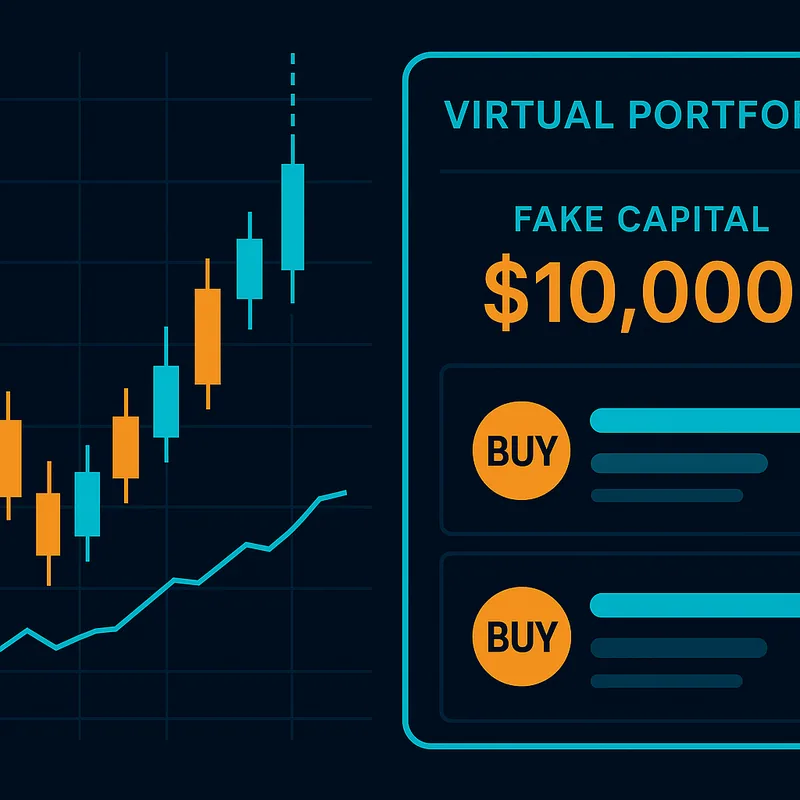
A stock market simulator replicates live market conditions using real-time market data (or slightly delayed data) and a virtual portfolio — a simulated account funded with fake capital. You place trades as you would in a live brokerage, but no real money changes hands.
Paper Trading vs. Simulation: Is There a Difference?
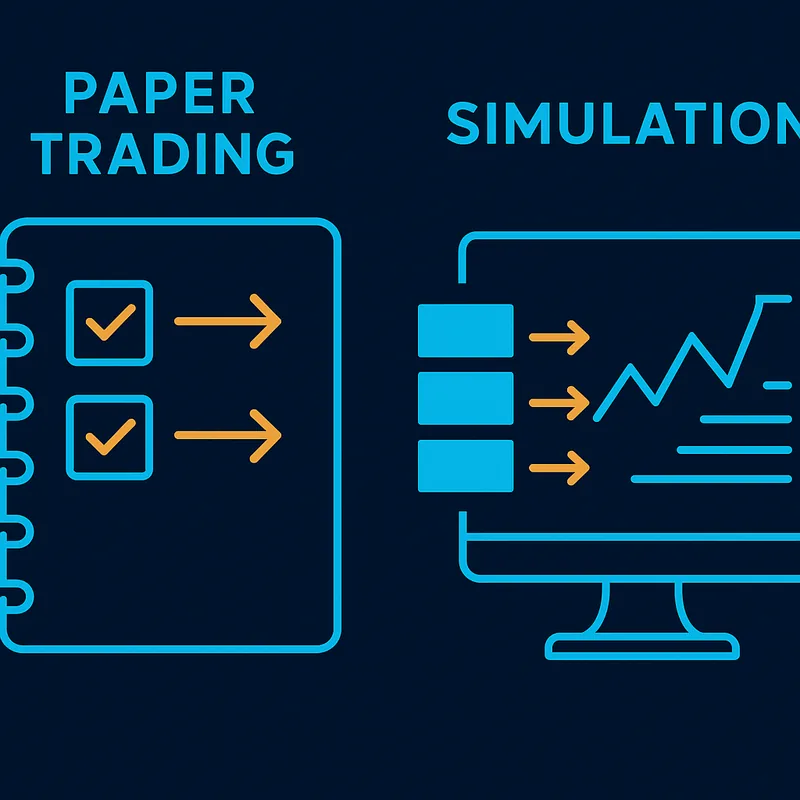
Paper trading is the older term — it comes from the practice of writing hypothetical trades on paper and tracking them manually. Modern simulators automate that process, executing virtual trades against live or historical price feeds and tracking your portfolio in real time. For practical purposes, the terms are interchangeable today, though "paper trading" often implies a brokerage's built-in practice mode, while "simulator" can refer to standalone tools with additional features like leaderboards or educational scaffolding.
A day trading simulator specifically emphasizes intraday execution — rapid order entry and minute-by-minute P&L — making it more relevant for active traders than a basic portfolio tracker.
What Assets Can You Simulate? Stocks, Crypto, Futures, and Options
Simulators vary widely in asset coverage. Some focus on equities listed on exchanges like the NYSE and Nasdaq; others extend to futures and options simulation or crypto pairs. The asset coverage matters: a simulator that only handles US equities won't help you practice a Bitcoin momentum strategy. Always verify what a platform supports before committing time to it.
Why Use a Stock Market Simulator Before Trading Real Money?
The short answer: because making expensive mistakes with fake money is far better than making them with real money. But the longer answer is more nuanced.
The Real Benefits of Risk-Free Practice
Emotional discipline and risk management practice. Simulation lets you experience the mechanics of loss — watching a position move against you, deciding whether to hold or cut — without the financial pain. That repetition builds procedural habits even if it can't fully replicate the emotional stakes.
Testing a trading strategy without financial loss. Before you commit capital to a specific setup — say, buying breakouts above a 20-day high with a 2% stop-loss — you can run it through dozens of trades in a risk-free practice environment to see whether the logic holds up in real market conditions.
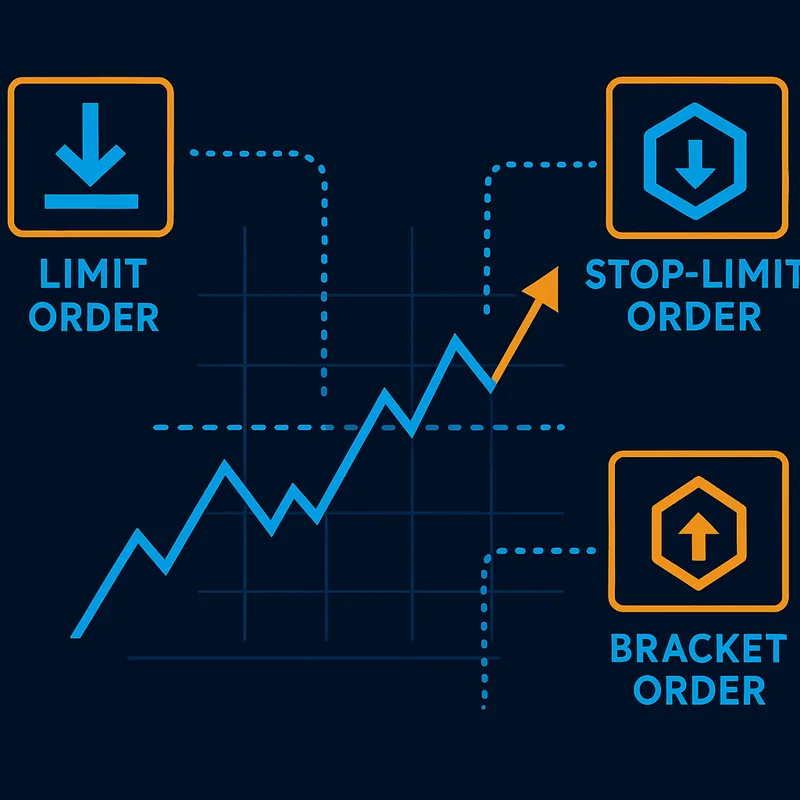
Understanding order types and market mechanics. Market orders, limit orders, stop-limit orders, and bracket orders all behave differently under different liquidity conditions. Simulators let you observe that behavior without paying tuition in real losses.
Who benefits most: Beginners learning the basics of position sizing and order entry. Intermediate traders refining a specific system before scaling it. Anyone exploring futures and options simulation as a lower-stakes way to understand derivatives mechanics before trading them live.
Honest Limitations You Should Know Before Relying on a Simulator
Simulators have real blind spots that every trader should understand before over-relying on them.
- Simulated fills vs. real slippage. In a simulator, your limit order at $50.00 fills at $50.00. In live markets, thin liquidity or fast-moving prices mean you might fill at $50.08 — or not at all. That difference compounds over hundreds of trades.
- No emotional stakes. Knowing the money isn't real changes your behavior. You'll hold losers longer, size up recklessly, and recover from drawdowns without the psychological weight that real losses carry. Simulation builds mechanical skill; it doesn't fully replicate the mental game.
- Manual simulation can't validate rule-based logic. If your strategy has specific, codified entry and exit conditions — "buy when RSI crosses above 30 and price is above the 50-period EMA" — manually paper trading that rule is slow, inconsistent, and error-prone. You'll miss signals, second-guess entries, and introduce human bias into what should be a systematic test.
Best Stock Market Simulators: Free and Paid Options
Free Simulators for Beginners
Investopedia Stock Simulator is one of the most accessible entry points. It's free and web-based, with educational content integrated alongside the trading interface. It's well-suited to beginners who want structured learning alongside practice — check the platform directly for current account settings and data feed details.
thinkorswim (Schwab) paper trading is a feature-rich free option for active traders. The paperMoney mode mirrors the full thinkorswim platform, offering broad instrument coverage and advanced charting tools. The learning curve is steep, but the depth is substantial among free tools — verify current feature availability on the Schwab site, as offerings can change.
Stock Market Game (operated by SIFMA Foundation) and HowTheMarketWorks are primarily designed for students and classroom use. They're functional for absolute beginners but lack the depth active traders need.
CME Group publishes educational resources and tools for traders learning futures mechanics — margin, contract specs, and rollover dates. Check their site directly for any simulation or practice tools currently available.
Simulators Built for Active and Algorithmic Traders
Here's where standard simulators fall short: they're built for manual trading. If you're trying to develop a systematic, rule-based strategy — one with defined entry conditions, exit conditions, and stop-loss logic — manually paper trading it introduces too much human inconsistency to be a reliable test.
Crypto and multi-asset traders are particularly underserved by equity-only simulators. Most free tools don't support crypto pairs at all, and none of them let you define and test automated logic visually.
Quberas approaches this differently. Rather than simulating manual trades, it lets you build a complete strategy — connecting indicators, defining entry and exit conditions, setting stop-losses — and then backtest that exact rule set against historical data. You see where every rule triggered directly on the chart. It's the logical evolution of a simulator for anyone moving toward automated trading.
How to Use a Stock Market Simulator Effectively
Most traders use simulators wrong. They open an account, start clicking buy and sell, and treat it like a video game. Here's how to extract real skill from the process.
Step 1: Define Your Strategy Rules Before You Start
Before you place a single simulated trade, write down your rules in plain language:
- What conditions trigger an entry?
- Where does your stop-loss sit?
- What's your target, and what signals an exit?
- What's your maximum position size as a percentage of the account?
This forces you to think in systems rather than impulses. Practice stock trading with fake money productively means treating every trade as a data point in a larger experiment, not a one-off guess.
Step 2: Simulate With Realistic Position Sizes
Set a realistic account size that mirrors your intended live capital. If you plan to trade with $5,000, don't simulate with a much larger balance — the position sizing math is completely different, and you'll build habits that don't transfer. Most platforms let you customize your starting balance. Use it.
Apply the same risk-per-trade rules you'd use with real money — typically 1–2% of account per trade. Oversizing in simulation is the fastest way to build bad habits.
Step 3: Review Results and Identify Repeating Mistakes
Keep a trade journal — even a simple spreadsheet — logging entry price, exit price, the reason for the trade, and what actually happened. After 20–30 trades, patterns emerge: you'll see whether you're consistently exiting too early, holding losers too long, or trading the wrong market conditions.
Treat virtual losses as real learning events. When a simulated trade goes wrong, do the same post-mortem you'd do with real money. The discipline you build in simulation is the discipline you'll carry into live trading.
Once you've identified a repeatable setup, the next step isn't to keep manually simulating it — it's to move from manual simulation to rule-based condition testing, where you can validate the logic systematically.
Stock Market Simulator vs. Real Trading: Key Differences
Understanding the gap between simulation and live trading isn't pessimism — it's preparation.
Slippage and liquidity. Simulators assume perfect fills. Real markets don't. In thinly traded stocks or during high-volatility moments, your actual fill price can differ meaningfully from the quoted price. This affects every strategy that relies on precise entry and exit levels.
Psychological pressure. This is the biggest gap. Watching $500 of real money evaporate in 10 minutes produces a physiological stress response that no simulator can replicate. Traders who perform well in simulation sometimes freeze or overtrade when real capital is on the line. Simulation builds mechanical competence; managing real-money psychology requires live experience, ideally at small size.
Real-time market data quality. Free simulators vary in data feed quality — some use delayed data, others offer real-time feeds. If precise timing matters to your strategy, verify whether the platform uses true real-time data before relying on it for intraday testing.
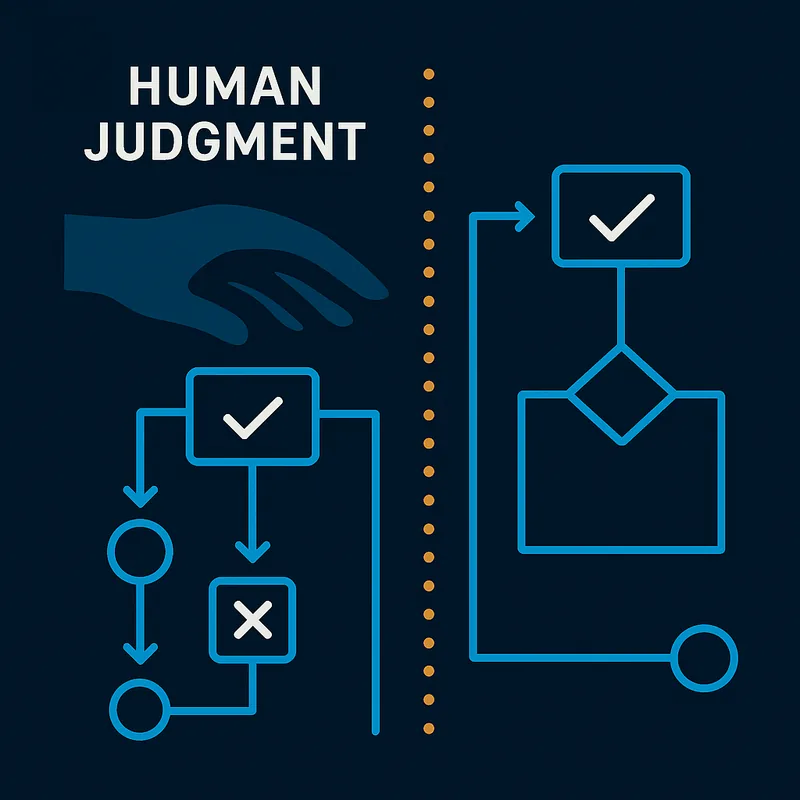
Why manual simulation can't validate automated rule logic. This is the critical limitation most guides ignore. If your strategy is rule-based — "enter when these three conditions align, exit when this condition breaks" — manually paper trading it introduces human judgment at every step. You'll unconsciously override rules, miss signals, and produce results that don't reflect how the strategy actually performs when executed mechanically. Backtesting — running your exact rule set against historical data automatically — is the only way to get a clean read on rule-based logic.
From Simulator to Live Trading: How Backtesting Closes the Gap
What Backtesting Does That a Simulator Can't
Backtesting is the process of running a defined trading strategy against historical market data to see how it would have performed. Unlike manual paper trading, backtesting executes your rules exactly as written — no hesitation, no second-guessing, no missed signals. You get a clean performance record: win rate, average gain/loss, maximum drawdown, and how the strategy behaved across different market conditions.
Where a simulator tests your ability to execute manually, backtesting tests whether your rules themselves have edge. That's a fundamentally different question — and for anyone building an automated strategy, it's the more important one.
How Quberas Lets You Visualize and Validate Strategy Logic Before Going Live
Quberas is built specifically for traders who want to move from manual simulation to automated strategy validation without writing code. The workflow is straightforward:
- Build your strategy using a visual drag-and-drop interface — connect indicators, define entry conditions, set averaging orders, configure exit conditions and stop-losses.
- Backtest the complete rule set against historical data. The platform runs your exact logic, not an approximation of it.
- See rule triggers directly on the chart. Every point where your entry or exit conditions fired is highlighted visually, so you can inspect individual signals and understand exactly why the strategy behaved as it did.
- Launch with confidence that the logic you tested is the logic that runs live.
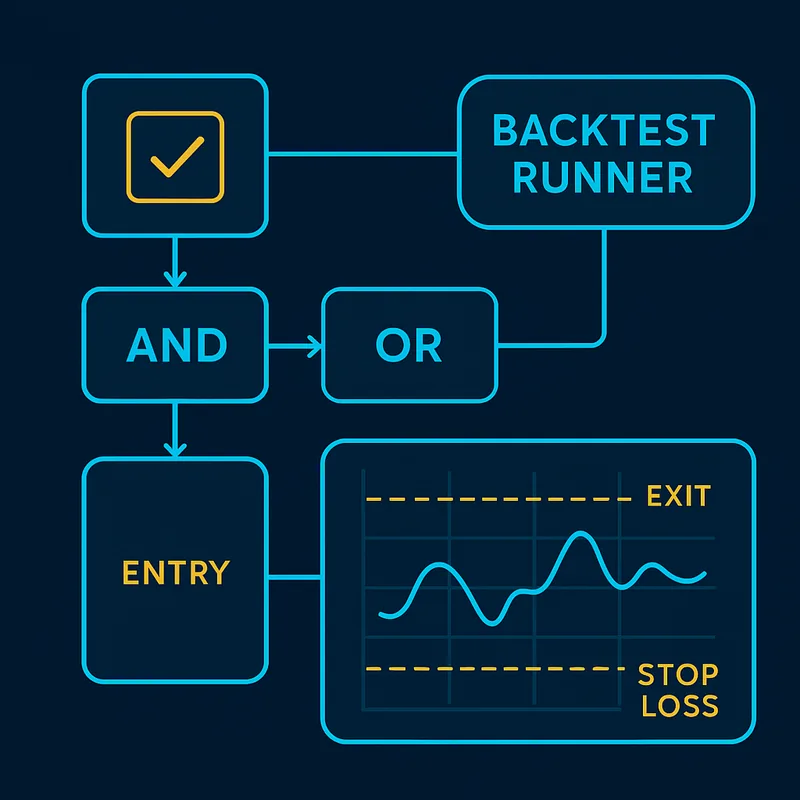
The no-code approach means the barrier isn't programming skill — it's strategy clarity. If you can define your rules in plain language, you can build and test them in Quberas. The platform supports crypto and multi-asset trading, which addresses the gap that equity-only simulators leave for traders working across markets.
This is the step that bridges simulation and live trading: not more manual paper trades, but systematic validation of the rules themselves.
Frequently Asked Questions About Stock Market Simulators
Is a stock market simulator worth it? Yes — with caveats. Simulators are genuinely useful for learning order mechanics, testing strategy logic at a basic level, and building procedural habits. They're less useful for replicating the psychological experience of real trading or for validating complex, rule-based automated strategies. Use them as a starting point, not a final test.
What is the best free trading simulator? It depends on your goal. For beginners, Investopedia Stock Simulator offers integrated education alongside practice trading. For active traders, thinkorswim's paperMoney mode provides broad instrument coverage at no cost. For algorithmic strategy building and backtesting, Quberas goes beyond simulation into automated rule validation — a different category entirely.
Can you practice day trading with a simulator? Yes. Platforms like thinkorswim offer paper trading modes suited to intraday practice. Just be aware that simulated fills won't reflect real slippage, which matters more in fast intraday markets than in longer-timeframe trading.
How is backtesting different from paper trading? Paper trading tests your ability to execute a strategy manually in real time. Backtesting runs your defined rules automatically against historical data to measure how the strategy itself performs — independent of human execution. For rule-based or automated strategies, backtesting is the more reliable test of whether the logic has edge.
Is Quberas free to try? Visit quberas.com for current plan details and trial options.
Ready to move beyond manual simulation? Build and backtest your first automated trading strategy on Quberas — no code required. See exactly how your rules trigger on the chart before you risk a single dollar.