Cryptohopper Review 2025: Features, Pricing & Alternatives
Cryptohopper is a legitimate, cloud-based automated crypto trading bot platform that has been operating since 2017. It connects to major exchanges, supports both signal-based and rule-based trading, and has built a substantial user base. But whether it's worth your subscription depends heavily on how much you care about understanding exactly what your bot is doing — and that's where this review gets honest.
What Is Cryptohopper?
Cryptohopper is a cloud-hosted automated crypto trading bot that executes trades on your behalf across connected exchanges, 24/7, without requiring your computer to stay on. It's one of the longer-standing names in retail crypto automation, and according to the company's own blog, it has surpassed one million registered users.
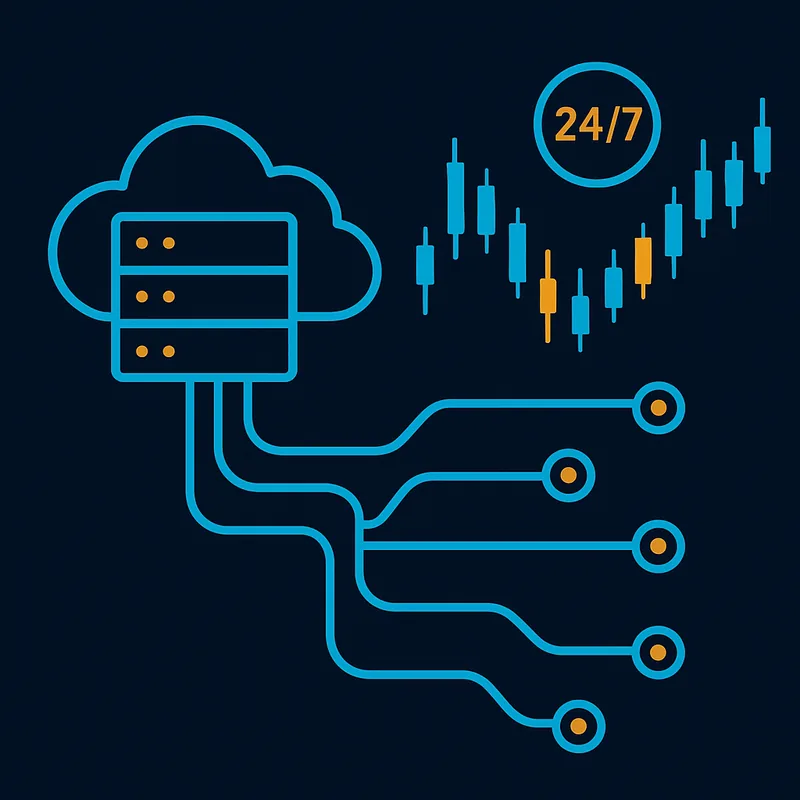
The platform is designed for traders who want to automate strategies without building infrastructure from scratch. It supports exchange integrations with major platforms including Binance, Coinbase Advanced, Kraken, Bybit, and KuCoin, among others. Beyond basic automation, it layers in an AI trading signals marketplace, copy trading (mirroring another trader's bot configuration), and a strategy marketplace where users can buy or subscribe to pre-built setups.
Cryptohopper targets a broad audience — from beginners who want to follow signals without building anything, to intermediate traders who want to configure their own indicator-based rules. That wide scope is both its strength and the source of most of its friction.
How Cryptohopper Works
Signal-Based Trading vs. Building Your Own Strategy
Cryptohopper gives you two main paths to automation. The first is signal-based trading: you subscribe to an external signal provider through the platform's marketplace, and the bot executes buy or sell orders whenever a signal fires. You're essentially outsourcing the logic to someone else's system.
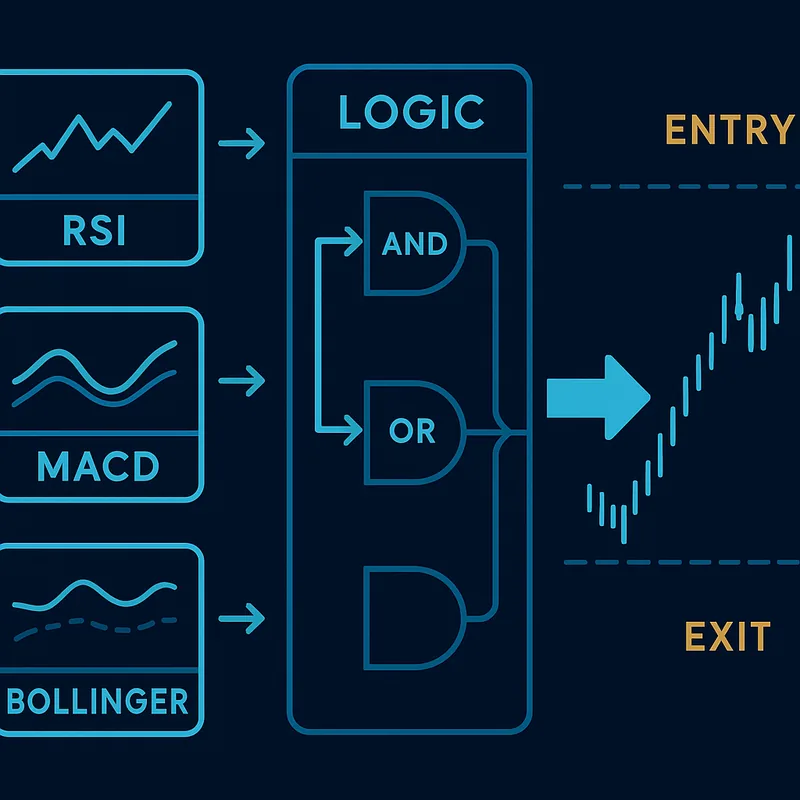
The second path is building your own strategy builder configuration — selecting technical indicators (RSI, MACD, Bollinger Bands, etc.), setting thresholds, and defining when those conditions should trigger a trade. This is where most intermediate traders spend their time, and where the platform's complexity becomes apparent.
DCA (dollar-cost averaging) — the practice of placing additional buy orders as a position moves against you to lower your average entry price — is supported as a core feature. So is a trailing stop, which dynamically adjusts your stop-loss level as price moves in your favor, locking in gains without exiting too early. Both are configurable within the bot's parameters, though the interface for doing so involves navigating multiple nested settings menus.
Trades are triggered automatically in the cloud. Once your bot is live, Cryptohopper's servers monitor your conditions and fire orders to your exchange via API — no local machine required.
Supported Exchanges and Setup Process
Setup follows a standard API key connection flow: generate read and trade permissions on your exchange, paste the keys into Cryptohopper, and configure your bot's base currency and position sizing. Cryptohopper does not require withdrawal permissions on your API key, which is an important security boundary. The platform supports a range of major exchanges — check the current integrations list on Cryptohopper's site, as availability changes over time.
Cryptohopper Features Overview
Strategy Builder and Condition Logic
The strategy builder lets you stack technical indicators and define entry and exit conditions based on their values. You can combine multiple indicators with AND/OR logic, set candle-based triggers, and configure separate buy and sell templates.
The honest limitation here: the logic is configured through parameter fields and dropdowns, not visually. You define your rules in a settings panel, then trust that the bot is applying them correctly. There's no way to look at a historical chart and see exactly where each condition fired — you're working somewhat blind until you run a backtest.
Backtesting Capabilities
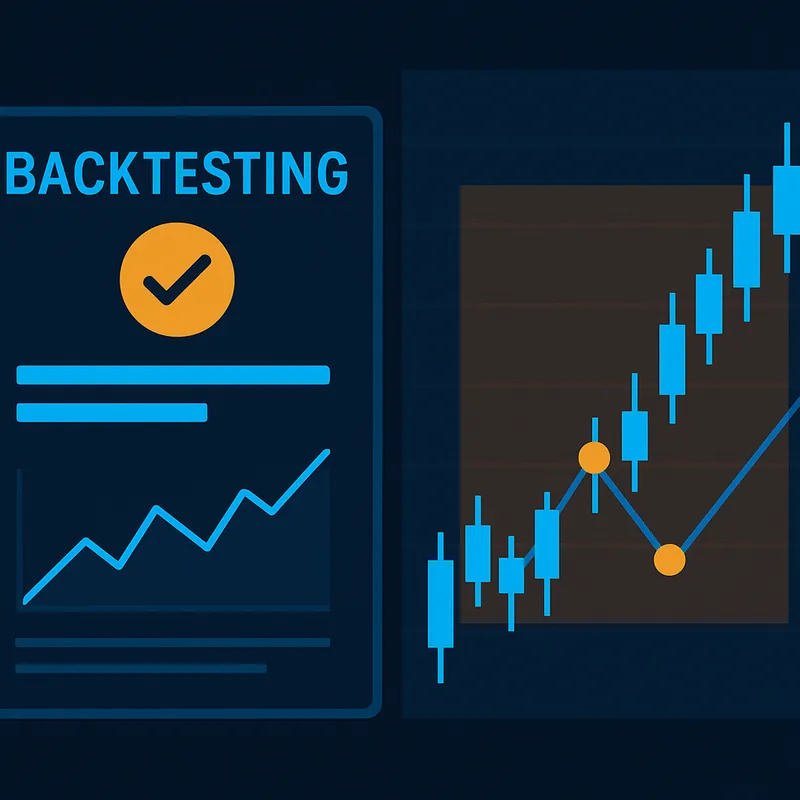
Backtesting — running your strategy against historical price data to see how it would have performed — is available on paid plans. Cryptohopper's backtesting generates a performance report with win rate, profit/loss, and trade history. What it doesn't do is show you why individual trades triggered on the chart. You get aggregate results, not a visual walkthrough of your logic in action.
Copy Trading and the Marketplace
Copy trading lets you clone another user's bot configuration directly into your own account. The signal marketplace offers subscriptions to third-party signal providers at varying price points on top of your Cryptohopper subscription. Strategy templates are also available for purchase.
Quality in the marketplace varies significantly. Signal providers display historical performance stats, but those figures aren't independently audited, and past results in crypto are particularly unreliable predictors of future performance.
Risk Management Tools: DCA, Trailing Stop, and More
Beyond DCA and trailing stops, Cryptohopper supports stop-loss orders, take-profit targets, position sizing controls, and a "panic sell" feature that closes all open positions immediately. A paper trading (simulation) mode is available on some plans, letting you test a strategy with virtual funds before going live.
A mobile app exists for iOS and Android, primarily for monitoring — not for building or editing strategies.
Cryptohopper Pricing and Plans
Free Plan: What You Actually Get
Cryptohopper's entry-level free tier lets you explore the interface and connect an exchange, but you cannot run a live bot. It's effectively a demo environment — no automated trading, no backtesting, no live signal execution. Note that Cryptohopper has updated its plan naming over time; check the current pricing page directly for the latest tier names and inclusions.
Paid Tiers Compared: Explorer, Adventurer, Hero
Cryptohopper offers three paid tiers — Explorer, Adventurer, and Hero — each unlocking progressively more bots, open positions, and features. Annual billing is available at a discount versus monthly billing; the exact savings are listed on Cryptohopper's pricing page.
The Explorer plan is the entry point for live trading and suits traders running a single strategy on one exchange. Backtesting access is restricted at this tier.
The Adventurer plan is where most active traders land — it unlocks full backtesting, paper trading, and the ability to run separate strategies or exchanges simultaneously.
The Hero plan targets traders managing larger portfolios or multiple strategies across exchanges, with the highest bot count and concurrent position limits.
For current prices and exact position limits at each tier, verify directly on Cryptohopper's pricing page — figures change with promotions and plan updates.
Hidden Costs: Marketplace Signals and Add-Ons
The subscription price is not the full cost. If you want to use signal providers from the marketplace — which many users do, especially at the Explorer level where building your own strategy is harder — you'll pay separately for each signal subscription. Premium signals carry their own recurring fees on top of your platform subscription. Strategy templates from the marketplace are also priced individually. A user running multiple signal subscriptions can see their total monthly spend climb well above the base plan cost before exchange fees are factored in.
Is Cryptohopper Legit and Safe?
Yes — Cryptohopper is a legitimate platform, not a scam. It's been operating since 2017, is incorporated in the Netherlands, and has a verifiable track record and public team. It does not have custody of your funds at any point; it operates through exchange API keys with trade-only permissions. The platform explicitly instructs users not to grant withdrawal permissions, which means even a compromised API key cannot move funds off your exchange.
That said, "legitimate" doesn't mean risk-free. Automated trading carries inherent market risk, and poorly configured strategies can lose money quickly. The platform itself is not regulated as a financial advisor, and no automated trading platform can guarantee returns.
Common scam concerns — such as Cryptohopper draining wallets or disappearing with funds — are not substantiated by the platform's architecture. Your funds stay on your exchange.
Cryptohopper Pros and Cons
Pros:
- Broad exchange support across major platforms
- Cloud-based — bots run 24/7 without your machine
- Large marketplace ecosystem for signals and strategies
- Copy trading option for users who don't want to build from scratch
- Established platform with a long track record and over one million registered users
Cons:
- Strategy logic is opaque — no visual confirmation of where rules fire on the chart
- Parameter-heavy setup with a steep learning curve for the strategy builder
- Cost escalates quickly when marketplace signal subscriptions are added
- Backtesting shows aggregate results, not chart-level rule visualization
- Reddit user sentiment (r/cryptohopper, r/algotrading) frequently cites break-even or inconsistent results, particularly for users relying on marketplace signals without understanding the underlying logic
Best suited for: Traders who want a plug-and-play signal-following setup and don't need to understand the underlying strategy logic deeply.
Not a good fit for: Traders who want to build and validate their own logic, see exactly where their rules trigger, and iterate quickly on strategy conditions before going live.
Is Cryptohopper Profitable?
Profitability depends almost entirely on strategy quality — not the platform. Cryptohopper is a tool for executing a strategy; it doesn't generate alpha on its own. A well-constructed strategy with sound entry and exit logic can perform well. A poorly configured one, or one based on unvalidated marketplace signals, will lose money regardless of which platform runs it.
The only reliable pre-live validation method is backtesting — running your strategy against historical data to understand how it would have behaved. Cryptohopper's backtesting gives you performance summaries, but it doesn't show you where on the chart each condition triggered. That gap matters: if you can't see which candles fired your entry rule and why, you can't confidently diagnose why a strategy underperformed or how to fix it.
Signal marketplace results vary widely. Providers display historical stats, but without knowing the market conditions those results were generated in, or whether the logic still applies, those numbers offer limited predictive value.
The traders most likely to get consistent results from any automated platform are those who understand their strategy's logic at the rule level — not just its historical win rate.
Cryptohopper Alternatives Worth Considering
Cryptohopper vs. Quberas: Side-by-Side Comparison
For traders who want to build their own strategies and actually understand what their bot is doing, Quberas is the most direct alternative. It's a no-code visual strategy builder designed specifically for traders who want full transparency into their bot's logic without writing code.
The core difference is in how strategy logic is built and verified:
| Feature | Cryptohopper | Quberas |
|---|---|---|
| Strategy building | Parameter fields and dropdowns | Drag-and-drop deal map interface |
| Logic transparency | Rules defined in settings panels | On-chart rule triggers — see exactly where conditions fire |
| Condition complexity | Indicator-based with AND/OR logic | Puzzle-style nested condition builder (price, indicators, volume, crossovers) |
| Backtesting clarity | Aggregate performance report | Visual debugger highlights chart zones tied to each condition |
| Entry/exit/risk config | Separate parameter menus | Entry conditions, averaging orders, exits, and stop-losses in one visual flow |
| Marketplace signals | Yes — large ecosystem | Not the focus; emphasis on building your own logic |
| Exchange integrations | Major exchanges supported | Major exchanges supported |
| Pricing model | Tiered subscription + marketplace add-ons | Transparent subscription; free to build and backtest |
Quberas's visual debugger is the feature that most directly addresses Cryptohopper's core limitation: instead of reading a performance report and guessing why trades fired, you see the exact chart zones where each condition triggered. That makes iteration — adjusting an entry rule, tightening a stop-loss, refining an averaging order — far faster and more grounded.

The puzzle-style condition builder supports nested logic across price, indicators, volume, and crossovers, covering the same indicator combinations Cryptohopper supports but in a format where the logic is visible rather than buried in settings fields.
Which Platform Is Right for You?
Choose Cryptohopper if you want a large signal marketplace, copy trading, and a cloud-based bot you can set up quickly without building strategy logic yourself — and you're comfortable not seeing exactly where your rules fire.
Choose Quberas if you want to build your own strategy, validate it visually before going live, and iterate on logic with full transparency into what your bot is actually doing at the rule level.
See how Quberas's visual strategy builder compares — build and backtest your first automated strategy for free, and watch your rules trigger live on the chart before you risk a single trade.