Best Crypto Trading Platform 2025 | Quberas
The best crypto trading platform in 2025 depends entirely on what you're trying to do — and most comparison articles never make that distinction. If you want to buy Bitcoin or Ethereum and hold it, a spot exchange is the right tool. If you want to build a systematic, rules-based strategy that runs automatically, you need something different. This guide maps three distinct platform categories — spot exchanges, copy-trading services, and no-code algorithmic strategy builders — so you can match the right tool to your actual workflow.
What Is a Crypto Trading Platform?
A crypto exchange is a marketplace where you deposit funds, place orders, and take custody of digital assets like Bitcoin and Ethereum. It handles order execution — matching your buy or sell with a counterparty — and typically provides a wallet, a price chart, and basic order types like market and limit orders. Coinbase, Kraken, and Binance are all exchanges in this sense.
But "crypto trading platform" has quietly expanded to cover tools that do something entirely different: defining how you trade, not just where. Strategy-building platforms let you encode rules — when to enter, when to exit, how to manage risk — and test those rules against historical data before risking real capital.
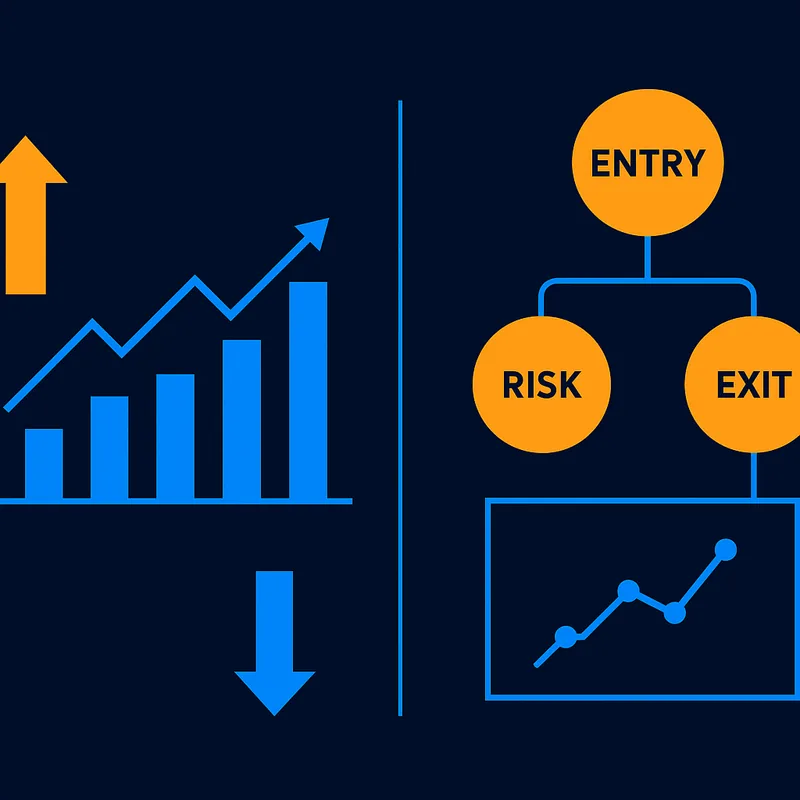
Exchanges vs. Strategy Builders: Why the Distinction Matters
Most traders start with an exchange and stay there, executing every trade manually. That works until it doesn't — until you're watching a chart at 2 a.m., second-guessing an entry, or missing a move because you stepped away. The distinction between an exchange (execution infrastructure) and a strategy builder (logic infrastructure) matters because manual and automated trading have fundamentally different requirements from a platform. An exchange cannot tell you whether your rules have a historical edge. A strategy builder cannot hold your funds. Many serious traders use both.
How to Choose the Best Crypto Trading Platform
Before comparing specific platforms, establish the criteria that actually matter for your situation.
Trading Fees: What to Actually Compare
Trading fees are charged as a percentage of each transaction, typically split between a maker fee (adding liquidity) and a taker fee (removing it). Fee structures vary significantly across exchanges and depend heavily on your trading volume tier. For high-frequency or automated strategies, fee drag compounds quickly — even a small per-trade difference across hundreds of monthly executions is material. Always compare the fee tier you'll realistically reach, not the headline rate, and check whether the exchange offers discounts for holding its native token or meeting volume thresholds.
Security: What Protects Your Funds
Security at the exchange level means cold storage ratios, proof-of-reserves audits, two-factor authentication enforcement, and insurance coverage. Coinbase holds the majority of customer assets in cold storage and carries crime insurance. Kraken has a strong security track record and publishes proof-of-reserves data. Binance has faced regulatory scrutiny in multiple jurisdictions — relevant context for withdrawal and custody decisions. No exchange is risk-free; withdrawal and custody considerations should factor into how much capital you keep on any single platform.
Asset Coverage: Bitcoin, Ethereum, and Beyond
If your strategy targets only Bitcoin and Ethereum, almost every major exchange covers you. If you trade altcoins or need specific perpetual futures markets, asset coverage diverges sharply. Binance lists hundreds of spot and derivatives pairs; Coinbase's selection is narrower; Kraken offers a solid mid-range with futures access in eligible regions.
Automation and Strategy Logic: The Criteria Most Reviews Skip
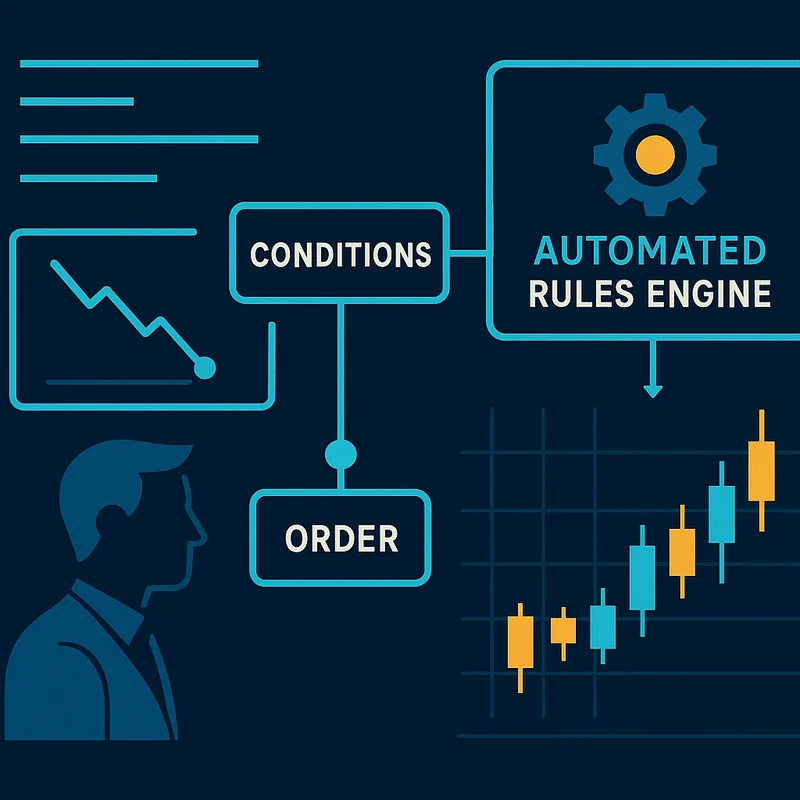
This is where standard exchange comparisons fall short. Algorithmic trading — executing trades based on predefined rules rather than manual decisions — requires a platform that can define conditions, test them historically, and trigger orders automatically. Spot exchanges typically provide APIs that allow external bots to place orders, but they offer no native tools for building strategy logic. If you want to automate without writing code, you need a dedicated no-code strategy builder with backtesting capability (running your rules against historical price data) and transparent strategy logic you can inspect before going live.
Platform Types Ranked: Which Category Fits Your Trading Style
Type 1: Spot Exchanges (Best for Buying, Selling, and Storing Crypto)
Spot exchanges are the right starting point for anyone who wants to acquire crypto, move between assets, or execute discretionary trades manually. Coinbase is a widely used option with a clean onboarding flow and educational resources. Kraken offers more advanced order types and strong fee competitiveness for active traders. Binance has deep liquidity and a wide asset selection globally. Crypto.com rounds out the major options with a strong mobile experience and its own ecosystem of products.
Trade-off: Spot exchanges are execution venues, not strategy tools. They tell you the price; they don't help you decide when to act or whether your rules have worked historically.
Best for: Traders who buy and hold, execute discretionary trades, or need an on-ramp to crypto markets.
Type 2: Copy-Trading Platforms (Best for Passive Followers)
Copy-trading platforms let you mirror the positions of experienced traders automatically, without defining your own strategy. Several platforms offer this model — you allocate capital, select a trader to follow, and their trades replicate in your account proportionally.
Trade-off: You're delegating all strategy decisions to someone else. You have no visibility into the logic behind their trades, no ability to backtest their approach independently, and no transferable skill if you want to eventually trade on your own rules.
Best for: Traders who want passive exposure to active strategies and are comfortable with full delegation.
Type 3: No-Code Algorithmic Strategy Builders (Best for Systematic Traders)
This category is where most comparison articles stop — because most don't know it exists as a distinct tool type. A no-code algorithmic strategy builder lets you define your own trading logic visually, without writing a line of code. You specify entry conditions, exit conditions, stop-loss rules, and position sizing using a drag-and-drop interface, then backtest the complete strategy against historical data before deploying it live.
Quberas is built specifically for this workflow. Its deal map interface lets you construct the full lifecycle of a trade — entry triggers, averaging orders, take-profit levels, stop-losses — as a visual diagram. Conditions are built using a puzzle-style logic editor that supports indicators, crossovers, volume conditions, and nested logic. Critically, every rule trigger is visible directly on the chart, so you can see exactly where your strategy would have acted before risking capital.
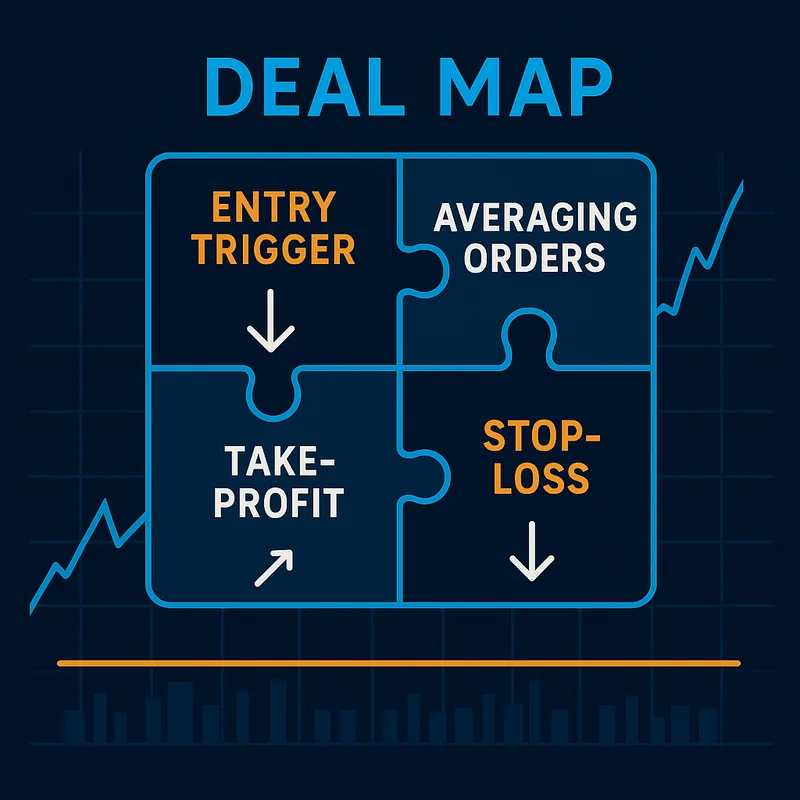
Trade-off: You're building your own strategy, which requires more upfront thinking than copy-trading. But you own the logic, you can iterate on it, and you understand exactly what the bot is doing at every moment.
Best for: Traders who have a systematic approach in mind and want to automate it without learning to code.
Best Crypto Trading Platform for Beginners
"Beginner-friendly" means different things depending on your goal. For buying your first Bitcoin or Ethereum, Coinbase is a clear starting point — it's designed to minimize friction for first-time buyers, with a straightforward onboarding flow and educational resources built in. The interface doesn't require any trading knowledge to navigate.
But if your goal is to automate a trading strategy as a beginner to algorithmic trading, the relevant question is different: which platform makes strategy logic accessible without a programming background? Here, a visual no-code builder lowers the barrier in a way that exchanges simply cannot. Instead of reading API documentation or writing Python scripts, you drag conditions onto a canvas, connect them, and see the result on a chart.
The drag-and-drop interface and visual debugger in a platform like this are specifically designed to make transparency into bot logic the default, not an afterthought. The deal map shows the complete structure of a strategy at a glance — entry conditions, exit conditions, stop-loss placement — so a trader new to automation can understand what they've built before it goes live. The learning curve for algorithmic trading is real, but a visual interface compresses it significantly compared to code-based alternatives.
Best Crypto Trading Platform for Automated and Algorithmic Trading
What Algorithmic Trading Actually Requires from a Platform
Algorithmic trading in crypto means executing trades based on a defined ruleset — not intuition, not manual timing. That requires a platform that can: (1) let you define entry conditions and exit conditions with precision, (2) support complex logic like indicators, crossovers, and volume conditions, (3) apply stop-loss rules automatically, and (4) test the complete strategy against historical data before live deployment. Spot exchanges provide none of these capabilities natively. Their APIs allow external bots to place orders, but the strategy logic has to be built and maintained elsewhere — typically in code.
How a No-Code Strategy Builder Works: Build, Backtest, Launch
The core workflow on a platform like Quberas follows three stages:
-
Build — Use the deal map and condition builder to define every rule in your strategy. Entry triggers might combine a moving average crossover with a volume condition; exits might fire on a price target or a reversal signal. Each condition is a visual block; nested logic is supported without any syntax.
-
Backtest — Run the completed strategy against historical price data. The visual debugger highlights the exact chart zones where each condition triggered, so you can inspect individual trades rather than just reading a summary P&L. This is where you identify whether your rules have a repeatable edge or whether they overfit to a specific market period.
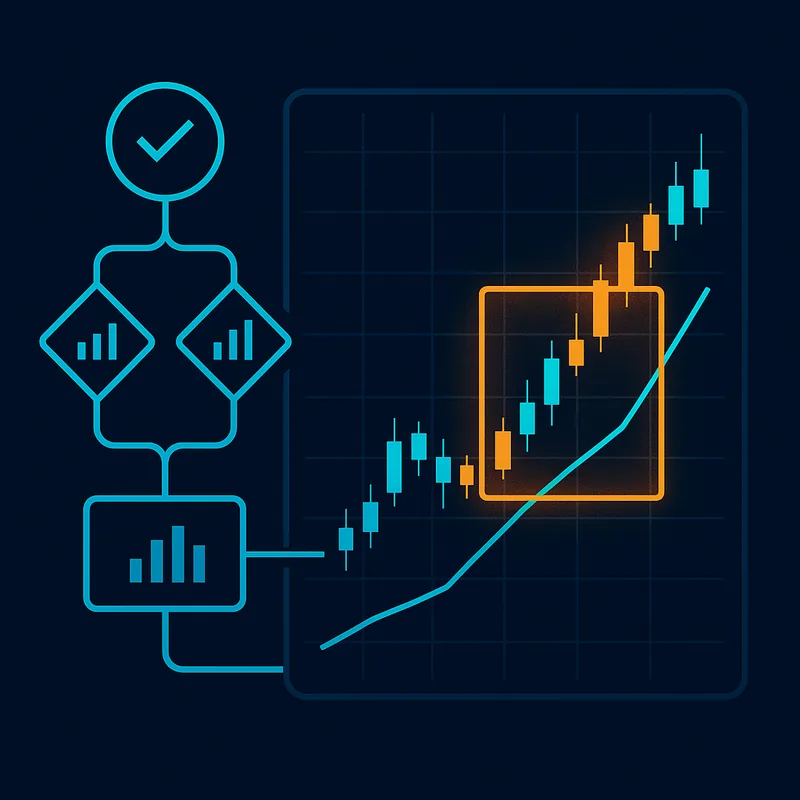
- Launch — Deploy the strategy to live markets once you're satisfied with the backtest results. The same logic that ran in the backtest executes in production — no translation layer, no discrepancy between what you tested and what runs.
Can a Backtested Strategy Create Consistent Returns? What the Data Shows
Backtesting does not guarantee future performance — no honest platform claims otherwise. What it does is replace guesswork with evidence. A strategy with a clearly defined edge in backtesting — consistent win rate, controlled drawdown, logical entry and exit conditions — gives you a structured basis for live trading that discretionary execution cannot match. The mechanism for repeatable edge is not prediction; it's systematic rule application across many trades. Discretionary trading introduces emotional variability at every decision point. A backtested, automated strategy removes that variability, which is why many traders find systematic approaches easier to evaluate and refine over time.
Key Features to Compare Across Platform Types
| Feature | Spot Exchanges (Coinbase, Kraken, Binance) | Copy-Trading Platforms | No-Code Strategy Builders (Quberas) |
|---|---|---|---|
| Trading fees | Percentage per trade; varies by volume tier | Performance fees to signal providers | Subscription-based; no per-trade fee to platform |
| Security | Cold storage, 2FA, insurance varies | Depends on underlying exchange | Strategy logic is local; funds stay on connected exchange |
| Supported assets | Hundreds (Binance) to dozens (Coinbase) | Depends on platform | Connects to supported exchanges; asset range inherited |
| Automation support | API only; no native strategy tools | Full delegation to another trader | Full native automation with visual logic builder |
| Backtesting | None | None | Built-in; visual debugger shows chart-level triggers |
| Visual strategy logic | None | None | Core feature; deal map + condition builder |
| Beginner UX | High (for buying crypto) | High (for passive following) | High (for building automated strategies without code) |
Frequently Asked Questions
What is the best crypto trading platform overall?
There is no single best platform — the right answer depends on your goal. For buying and holding Bitcoin or Ethereum, Coinbase and Kraken are among the most widely used options. For the deepest liquidity and asset selection, Binance leads globally. For building and automating your own trading strategy without code, a dedicated no-code strategy builder is the appropriate tool — a category that spot exchanges do not serve.
Can you trade crypto automatically without writing code?
Yes. No-code algorithmic strategy builders let you define entry conditions, exit conditions, stop-loss rules, and position logic through a visual interface — no programming required. The resulting strategy runs automatically based on the rules you set, with the same logic that you tested in backtesting.
What is the difference between a crypto exchange and an algorithmic trading platform?
A crypto exchange handles order execution and asset custody — it's where trades are placed and funds are held. An algorithmic trading platform handles strategy logic — it's where you define when to trade and why, test those rules historically, and automate execution. Most traders need both: an exchange to hold funds and execute orders, and a strategy platform to define and manage the logic.
How do I backtest a crypto trading strategy?
Backtesting runs your defined strategy rules against historical price data to evaluate how they would have performed. On a platform with built-in backtesting, you build your strategy using the condition editor, select a historical date range, and run the test. A visual debugger then shows you exactly which chart points triggered each rule — not just a summary result, but trade-by-trade inspection. This lets you identify whether your logic holds up across different market conditions before deploying capital.
Which platform is best for beginners who want to automate their strategy?
For beginners to algorithmic trading specifically, a visual no-code builder is the most accessible entry point. It removes the programming barrier while keeping full transparency into what the strategy is doing — you can see every rule trigger on the chart before going live. Coinbase is the better starting point if your goal is simply to buy crypto; a no-code strategy builder is the better starting point if your goal is to automate a systematic approach.
Ready to move beyond manual trading? Build, backtest, and launch your first automated crypto strategy on Quberas — no code required.